


01 / INTRODUCTION
Lord Vishnu who wears the crescent moon on
his crown
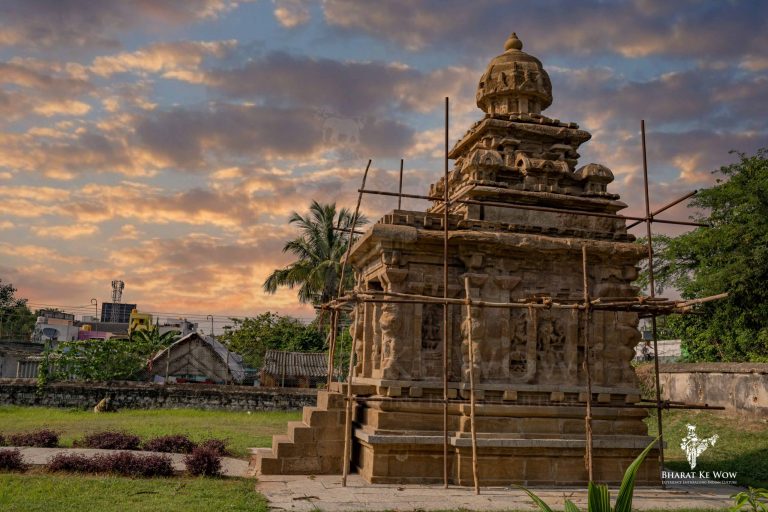
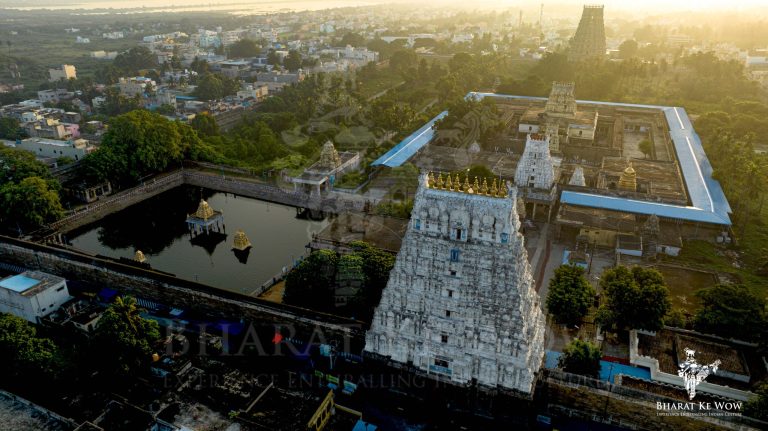
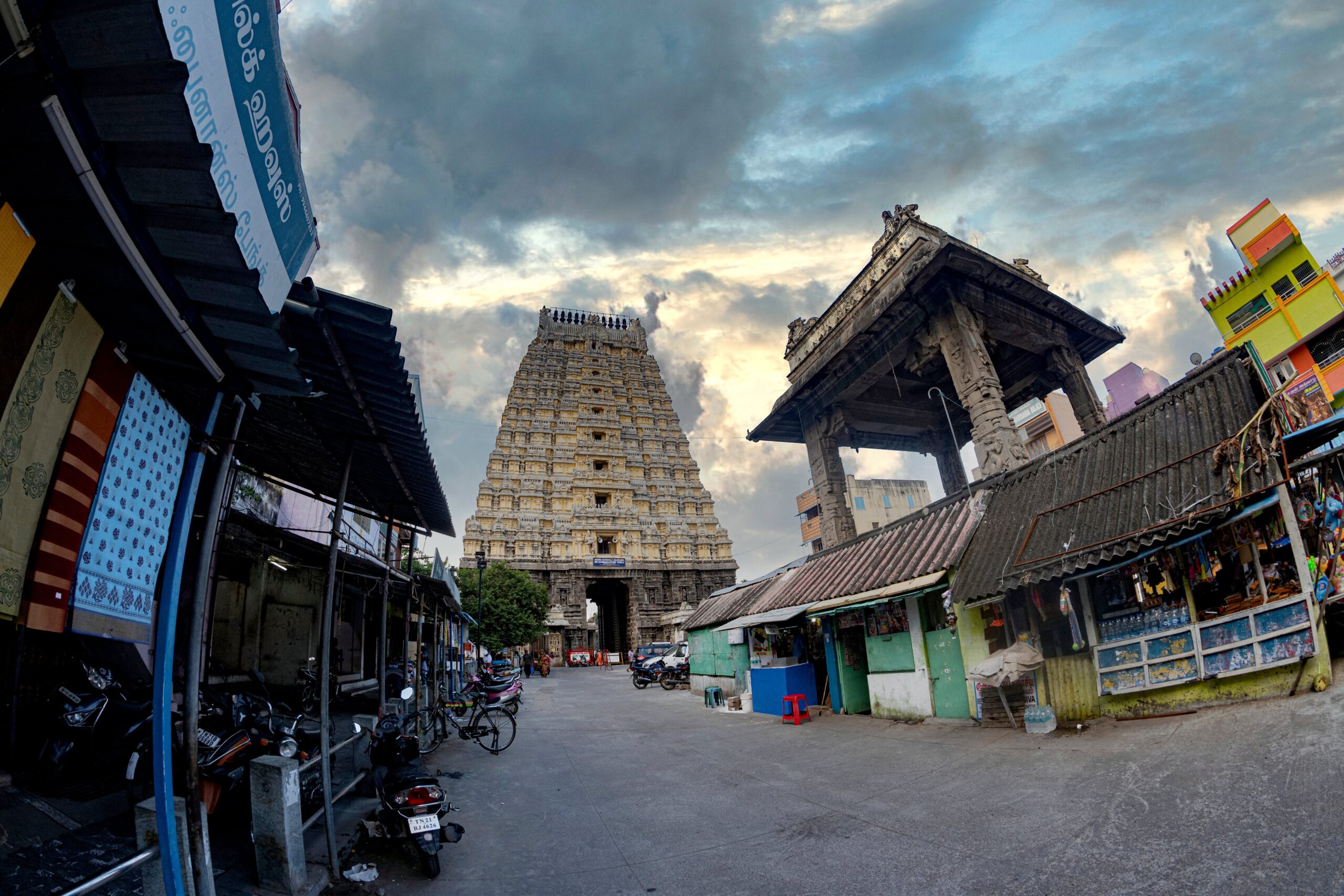
Nestled within the inner prakara of the magnificent Ekambareswarar Temple in Kanchipuram, Sri Nilatingaltunda Perumal Temple is one of the unique 108 Divya Desams where Shaiva and Vaishnava traditions coexist in remarkable harmony. Revered as the Lord who was cooled by the rays of the moon, this sacred shrine preserves ancient legends of the Halahala poison, Goddess Parvati's penance, and Lord Vishnu's cosmic intervention.
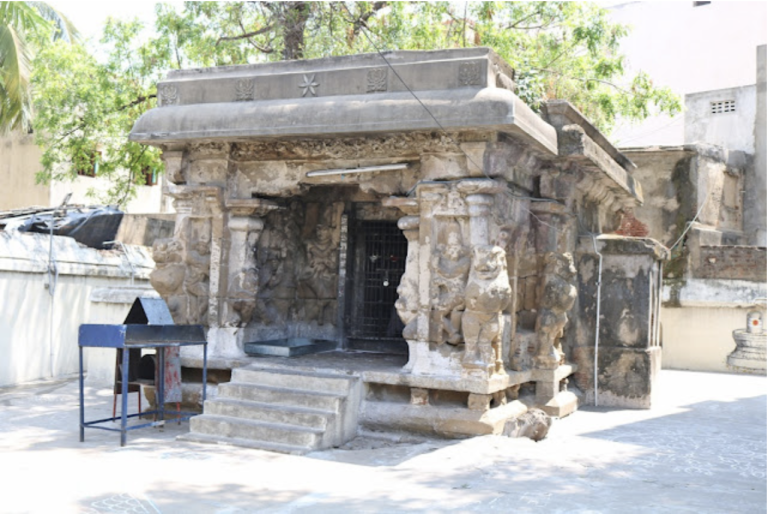
The enchanting Nilatingaltunda-Perumal Temple, an ancient Divya Desam located within the inner prakara of the Ekamresvara temple in Kanchipuram. This sacred shrine holds immense historical and mythological significance, where devotees can witness the harmonious blend of Shaivite and Vaishnavite traditions.
02 / HISTORICAL ASSIMILATION OF SHRINES
Historical Assimilation of Shrines
Situated within the Ekamresvara temple complex, the Nilatingaltunda-Perumal Temple exemplifies the assimilation of smaller shrines into larger temple complexes throughout history. Here, the worship of Lord Vishnu is conducted as per Shaivagamas by the Shivacharyas, offering a fascinating juxtaposition of traditions.
03 / SACRED IDOL AND LEGEND OF HALAHALA POISON
Sacred Idol and Legend of Halahala Poison
Originally housing a stucco image, the shrine now showcases a magnificent four-armed stone idol of Lord Vishnu. The temple’s name, Nilatingaltunda Perumal, originated from the belief that the scorching heat of the Halahala poison oppressed Lord Vishnu during the churning of the milky ocean. It is said that the cool lunar rays provided him solace, earning him the name “Nilatingaltunda” where “Nila” symbolizes the moon in Tamil.
04 / LEGEND OF GODDESS PARVATI'S PENANCE
Legend of Goddess Parvati's Penance
Another intriguing legend associated with the temple revolves around Goddess Parvati’s penance in Kanchipuram. When Lord Shiva decided to test her devotion, he released the sacred Ganga river from his matted hair. In response, Lord Vishnu assumed his awe-inspiring Visvaroopa, a colossal cosmic form, to prevent the floodwaters from reaching the worship altar. The direct rays of the moon falling upon Lord Vishnu during this event added to his appellation as Nilatingaltunda Perumal.
The Nilatingaltunda-Perumal Temple stands as a remarkable testament to the integration of diverse religious traditions. With its intriguing legends, historical assimilation, and the captivating blend of Shaivite and Vaishnavite practices, this sacred shrine offers devotees a profound spiritual experience. Plan a visit to Nilatingaltunda-Perumal Temple in Kanchipuram and immerse yourself in the divine grace of Lord Vishnu, Nilatingaltunda Perumal.
05 / WHY IT MATTERS
Why this place matters.
A Symbol of Religious Harmony
Nilatingaltunda Perumal Temple is one of Kanchipuram's most remarkable examples of the harmonious coexistence of Shaiva and Vaishnava traditions. Situated within the Ekambareswarar Temple, Lord Vishnu is worshipped here according to Shaivagama traditions by Shivacharyas, reflecting centuries of shared religious practice.
The Lord Cooled by the Moon
According to temple tradition, the intense heat generated by the Halahala poison during the churning of the Ocean of Milk affected Lord Vishnu. The soothing rays of the moon cooled him, giving rise to the name Nilatingaltunda Perumal, where 'Nila' signifies the moon.
Guardian of Parvati's Penance
Another sacred legend recounts how Goddess Parvati performed penance in Kanchipuram. When Lord Shiva released the sacred Ganga to test her devotion, Lord Vishnu assumed his magnificent Visvarupa to shield the worship altar, while the moon's rays illuminated his divine form.
A Living Divya Desam
Despite being housed within one of South India's greatest Shaiva temples, Nilatingaltunda Perumal continues to preserve its independent identity as a Divya Desam, welcoming devotees who seek divine grace, harmony, and spiritual unity.
06 / INSIDE THE TEMPLE
What to see inside.
The Shrine Within Ekambareswarar Temple
Discover one of the most unique Divya Desams in Bharat, located within the inner prakara of the great Ekambareswarar Temple. The shrine beautifully illustrates the shared sacred landscape of Kanchipuram.
The Legend of the Crescent Moon
Learn how Lord Vishnu came to be known as Nilatingaltunda Perumal after the cooling rays of the moon relieved him from the scorching heat associated with the Halahala poison.
The Visvarupa of the Lord
Explore the legend in which Lord Vishnu assumed his cosmic form to protect Goddess Parvati's worship during her penance when the waters of the Ganga descended from Lord Shiva's matted locks.
A Shrine of Shared Traditions
Witness the rare practice where a Divya Desam is worshipped according to Shaivagama traditions by Shivacharyas, offering a living example of religious harmony.
07 / THROUGH TIME
A history in layers.
- MYTHOLOGICAL ERA
Lord Vishnu is cooled by the rays of the moon after the episode of the Halahala poison, giving rise to the name Nilatingaltunda Perumal.
- MYTHOLOGICAL ERA
Lord Vishnu assumes his Visvarupa to protect Goddess Parvati's penance from the descending Ganga.
- EARLY MEDIEVAL PERIOD
The shrine becomes integrated into the Ekambareswarar Temple complex.
- MEDIEVAL PERIOD
The unique tradition of worship according to Shaivagamas by Shivacharyas continues.
- PRESENT DAY
Active Divya Desam preserving centuries-old traditions of Shaiva-Vaishnava harmony.
08 / PLAN YOUR VISIT
Plan your visit.
Timings and visitor details can change. Please confirm locally before you travel.
09 / PHOTOGRAPHS
From the whole to the detail.
Select a photograph to explore it at a larger scale.
10 / LOCATION & MAP
Place the story on the map.
PLACE THIS STORY ON THE MAP
Inside Ekambareswarar Temple, Kanchipuram, Tamil Nadu
Tamil Nadu, India
ABOUT THIS FIELD ENTRY
Rooted in the Bharat Ke Wow archive.
This page is drawn from the Bharat Ke Wow field entry for Nilatingaltunda-Perumal Temple. Sacred narratives are presented as temple tradition.
Read the original entry ↗