

01 / INTRODUCTION
Thirukkuripputh-tondar:
The Washerman Devotee
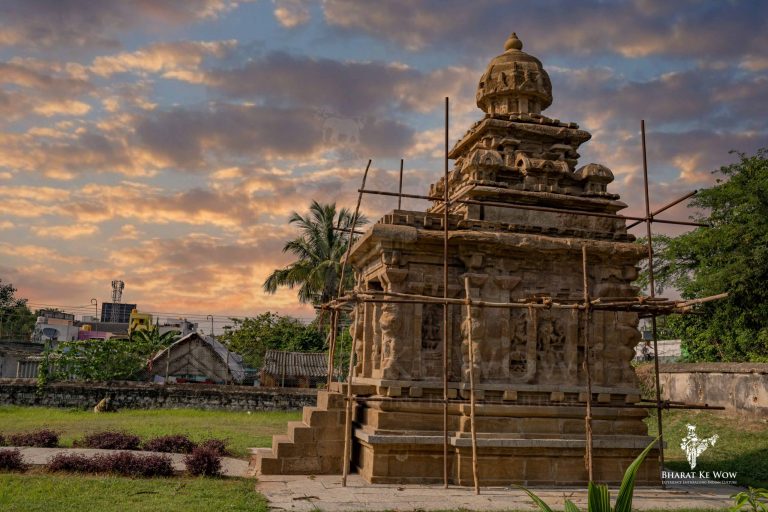
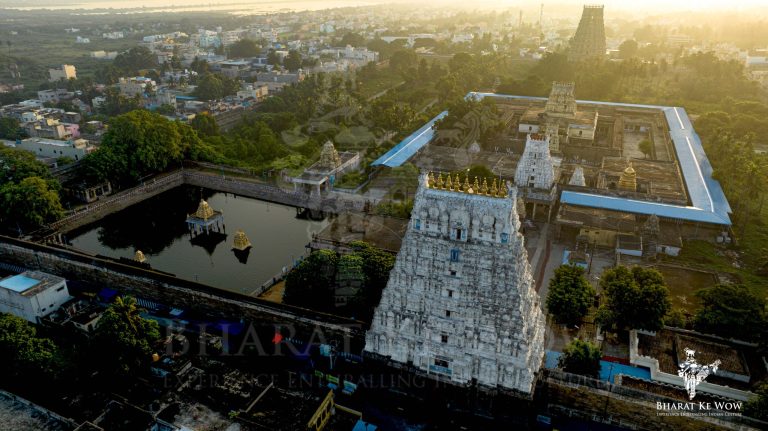
Located in the sacred city of Kanchipuram, Sri Muktishvara Temple preserves the inspiring story of Thirukkuripputh-tondar, one of the revered 63 Nayanmars. A humble washerman who dedicated his life to serving Lord Shiva's devotees, he attained liberation through unwavering devotion and selfless service. The temple continues to inspire pilgrims with its message that sincere service to devotees is itself the highest form of worship.
Kanchipuram, known as “Nagareshu Kanchi,” once stood as a shining beacon of learning and spirituality in ancient India. Within this revered city, lies the Muktishvara Temple, a sacred abode that holds within its walls a tale of devotion and divine intervention. Join us as we unravel the captivating story of Thirukkuripputh-tondar, the washerman devotee whose unwavering service and unyielding faith earned him the blessings of Lord Shiva and the epithet Muktishvara.
02 / THIRUKKURIPPUTH-TONDAR'S DEVOTION
Thirukkuripputh-tondar's Devotion
Born into the Ekali clan, Thirukkuripputh-tondar, also known as Sivanesar, possessed a heart brimming with devotion to Lord Ekamreshvara. His sole aspiration was to serve the Lord and his devotees, manifesting his deep love and reverence for the divine. Thirukkuripputh-tondar had a unique ability to understand the desires of Shiva’s devotees even before they were explicitly expressed, making him a cherished figure among the community. The temple’s hereditary trustees belong to the Ekali clan, honoring Thirukkuripputh-tondar’s lineage.
03 / THE WASHERMAN'S SERVICE
The Washerman's Service
Thirukkuripputh-tondar, by profession a washerman, selflessly undertook the task of washing the clothes of Shiva’s devotees as an act of service. With the sacred Shivapanchakshara mantra reverberating in his mind, he washed the garments with utmost care and devotion, returning them to their owners with profound love. His sincerity and dedication touched the heart of Lord Shiva, who wished to bestow upon him the ultimate state of Sivasayujya.
04 / DIVINE TESTING AND BLESSINGS
Divine Testing and Blessings
In the guise of a weary scholar, Lord Shiva appeared before Thirukkuripputh-tondar, seeking his services. Despite the inclement weather during the monsoon season, the devoted washerman readily accepted the challenge. As he began washing the clothes, a torrential downpour ensued, testing Thirukkuripputh-tondar’s faith and resolve. Filled with worry and despair, he sought solace at the washing stone, where a miraculous event unfolded.
05 / THE MIRACLE AND MUKTI
The Miracle and Mukti
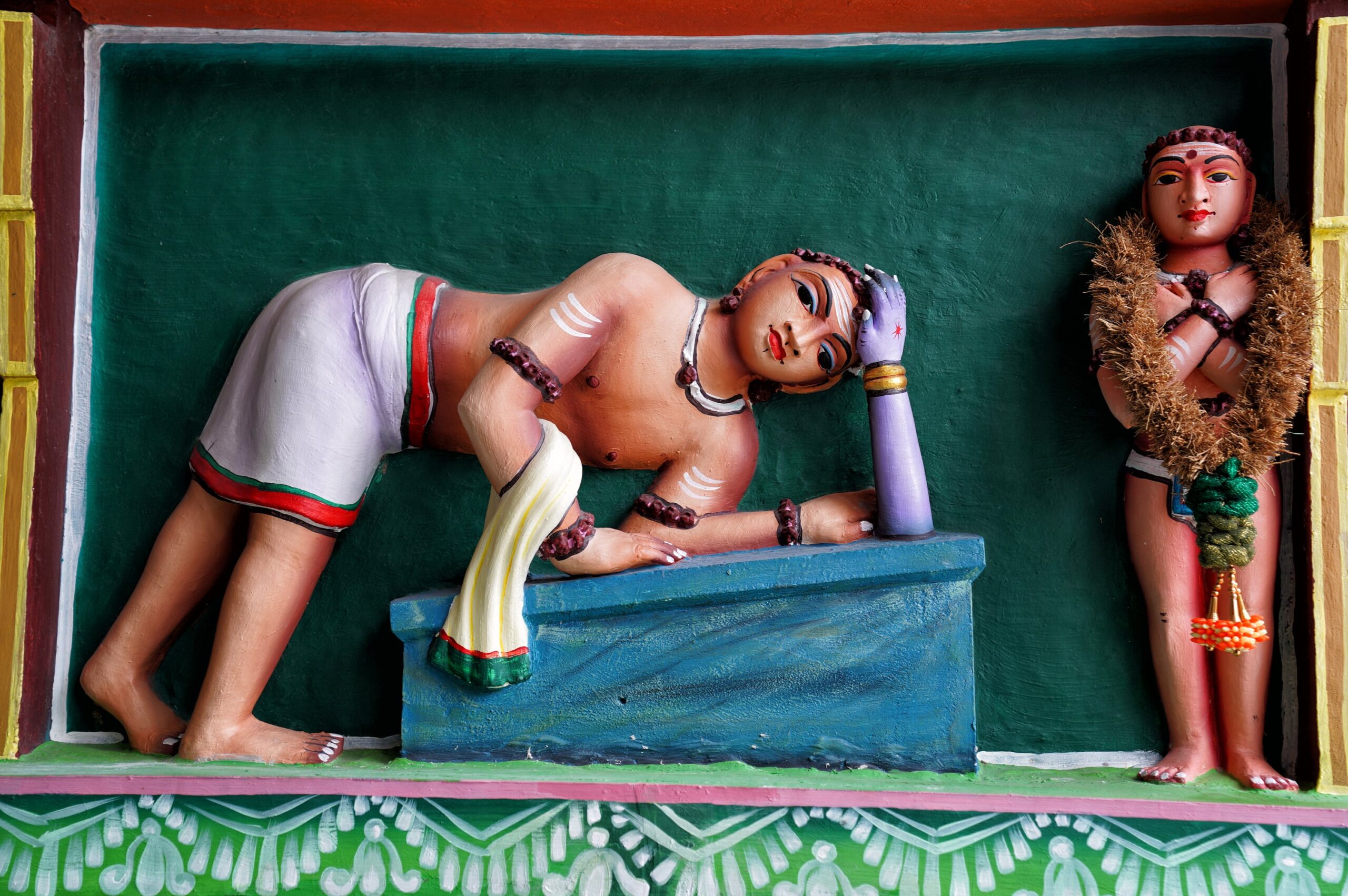
As Thirukkuripputh-tondar lamented his disrupted service, he started striking his head against the washing stone. To his astonishment, a hand emerged from the stone, instantly halting the rain. A divine shower of heavenly flowers followed, accompanied by the blessings of Lord Shiva and Goddess Parvati. Thirukkuripputh-tondar was bestowed with a joyous and prosperous life, along with the ultimate liberation, moksha. Thus, Lord Shiva came to be worshipped as Muktishvara, the bestower of Mukti.
06 / ADDITIONAL SHRINES AND SIGNIFICANCE
Additional Shrines and Significance
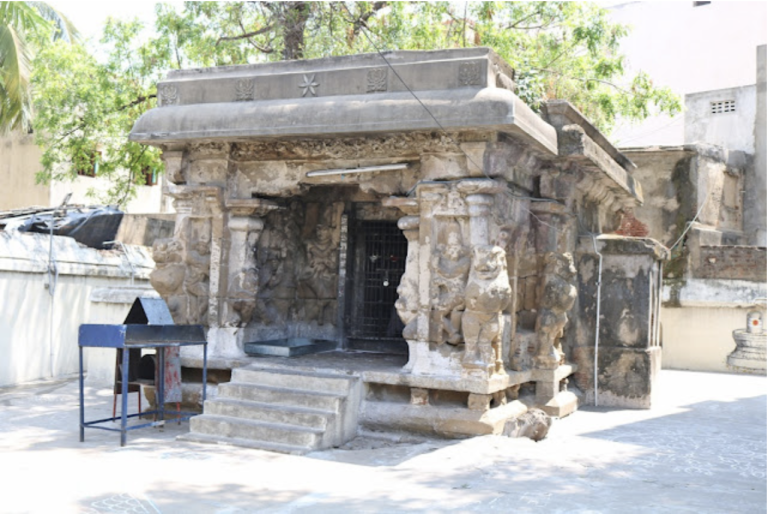
Within the sacred precincts of the Muktishvara Temple, one can find not only the main shrine of Lord Shiva but also several other revered deities. Alongside the idols of Thirukkuripputh-tondar, Ganesha, Valli-Devasena-Subrahmanya, Navagrahas, Shanaishcara, and Surya, there is a special shrine dedicated to Garudeshvara. Garudeshvara, the divine form of Garuda, the celestial vehicle of Lord Vishnu, holds great significance in Hindu mythology. By offering sincere worship to Lord Garudeshvara, devotees can find relief from all fears associated with snakes, gain the courage to overcome challenges and hardships, and emerge victorious in all their endeavors. The presence of Garudeshvara within the Muktishvara Temple exemplifies the harmonious blend of Shaivism and Vaishnavism, two major sects within Hinduism. It serves as a reminder of the interconnectedness and mutual reverence between these two divine forms, Lord Shiva and Lord Vishnu.
07 / CONCLUSION
Conclusion
The Muktishvara Temple in Kanchipuram stands as a testament to the deep-rooted devotion and divine experiences that have unfolded within its sacred walls. The story of Thirukkuripputh-tondar, the washerman devotee, captures the essence of unwavering faith, selfless service, and the blessings of Lord Shiva. As visitors explore this spiritual haven, they can immerse themselves in the rich history and religious significance associated with the Muktishvara Temple. The presence of various deities, including Garudeshvara, adds to its sanctity and showcases the diverse facets of devotion within Hinduism. Embark on a journey to Muktishvara Temple and witness the profound spirituality that continues to inspire and uplift devotees, allowing them to experience the divine presence and seek eternal liberation (Mukti) in the divine embrace of Lord Shiva, the Muktishvara.
08 / WHY IT MATTERS
Why this place matters.
The Temple of the Washerman Saint
Sri Muktishvara Temple is forever associated with Thirukkuripputh-tondar, one of the 63 Nayanmars. Though born into the Ekali community as a washerman, he transformed his humble profession into an act of sacred service by washing the garments of Lord Shiva's devotees with complete devotion.
The Miracle of Divine Grace
Temple tradition recounts that Lord Shiva appeared disguised as a weary scholar and tested the saint's devotion during heavy rains. When Thirukkuripputh-tondar despaired over his inability to complete his service, Lord Shiva revealed himself, blessed him with divine grace, and granted him moksha, giving the deity the name Muktishvara.
A Living Lesson in Selfless Service
Unlike stories centered on ritual or austerity, this temple celebrates seva, selfless service, as the highest expression of devotion. It teaches that caring for the devotees of God is itself an offering to the Divine.
Harmony of Shaivism and Vaishnavism
The temple houses several shrines, including the unique shrine of Garudeshvara, symbolizing the harmonious coexistence of Shaiva and Vaishnava traditions. This reflects Kanchipuram's long-standing spiritual inclusiveness.
09 / INSIDE THE TEMPLE
What to see inside.
The Sanctum of Muktishvara
Receive darshan of Lord Shiva as Muktishvara, the compassionate Lord who rewarded sincere service with eternal liberation.
The Story of Thirukkuripputh-tondar
Discover the inspiring life of the washerman saint whose devotion lay not in wealth or scholarship, but in lovingly serving the devotees of Lord Shiva.
The Miracle of the Washing Stone
Learn about the miraculous moment when Lord Shiva revealed himself after Thirukkuripputh-tondar struck his head against the washing stone in despair, ending the torrential rain and granting him divine blessings.
The Shrine of Garudeshvara
Visit the rare shrine dedicated to Garudeshvara, where devotees pray for protection from fear, courage in adversity, and relief from afflictions associated with serpents.
10 / THROUGH TIME
A history in layers.
- BHAKTI ERA
Thirukkuripputh-tondar serves Lord Shiva's devotees through humble service as a washerman.
- BHAKTI ERA
Lord Shiva tests the saint, reveals his divine form, and grants him moksha, leading to the worship of the deity as Muktishvara.
- PALLAVA PERIOD
Temple develops as an important Shaiva shrine.
- LATER CENTURIES
Hereditary trustees from the Ekali community continue preserving the saint's legacy.
- PRESENT DAY
Active place of worship commemorating one of the 63 Nayanmars and the ideal of selfless service.
11 / PLAN YOUR VISIT
Plan your visit.
Timings and visitor details can change. Please confirm locally before you travel.
12 / PHOTOGRAPHS
From the whole to the detail.
Select a photograph to explore it at a larger scale.
13 / LOCATION & MAP
Place the story on the map.
PLACE THIS STORY ON THE MAP
Kanchipuram, Tamil Nadu
Tamil Nadu, India
ABOUT THIS FIELD ENTRY
Rooted in the Bharat Ke Wow archive.
This page is drawn from the Bharat Ke Wow field entry for Muktishvara Temple. Sacred narratives are presented as temple tradition.
Read the original entry ↗