

01 / INTRODUCTION
Unveiling the Divine
Splendor
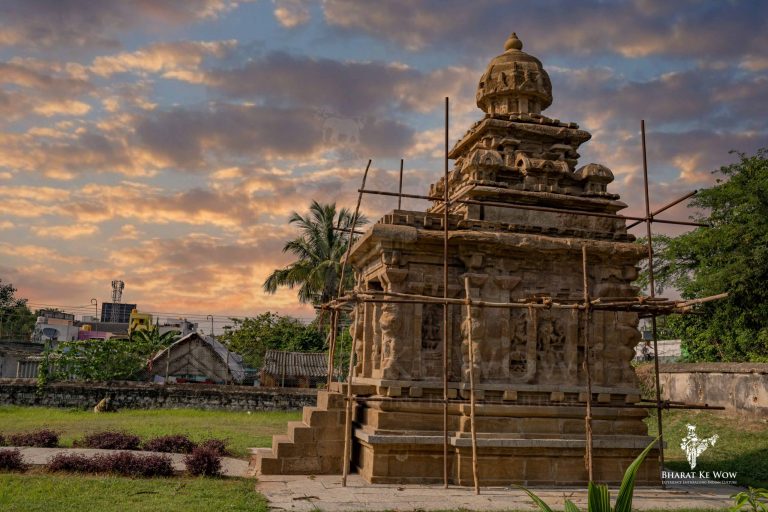
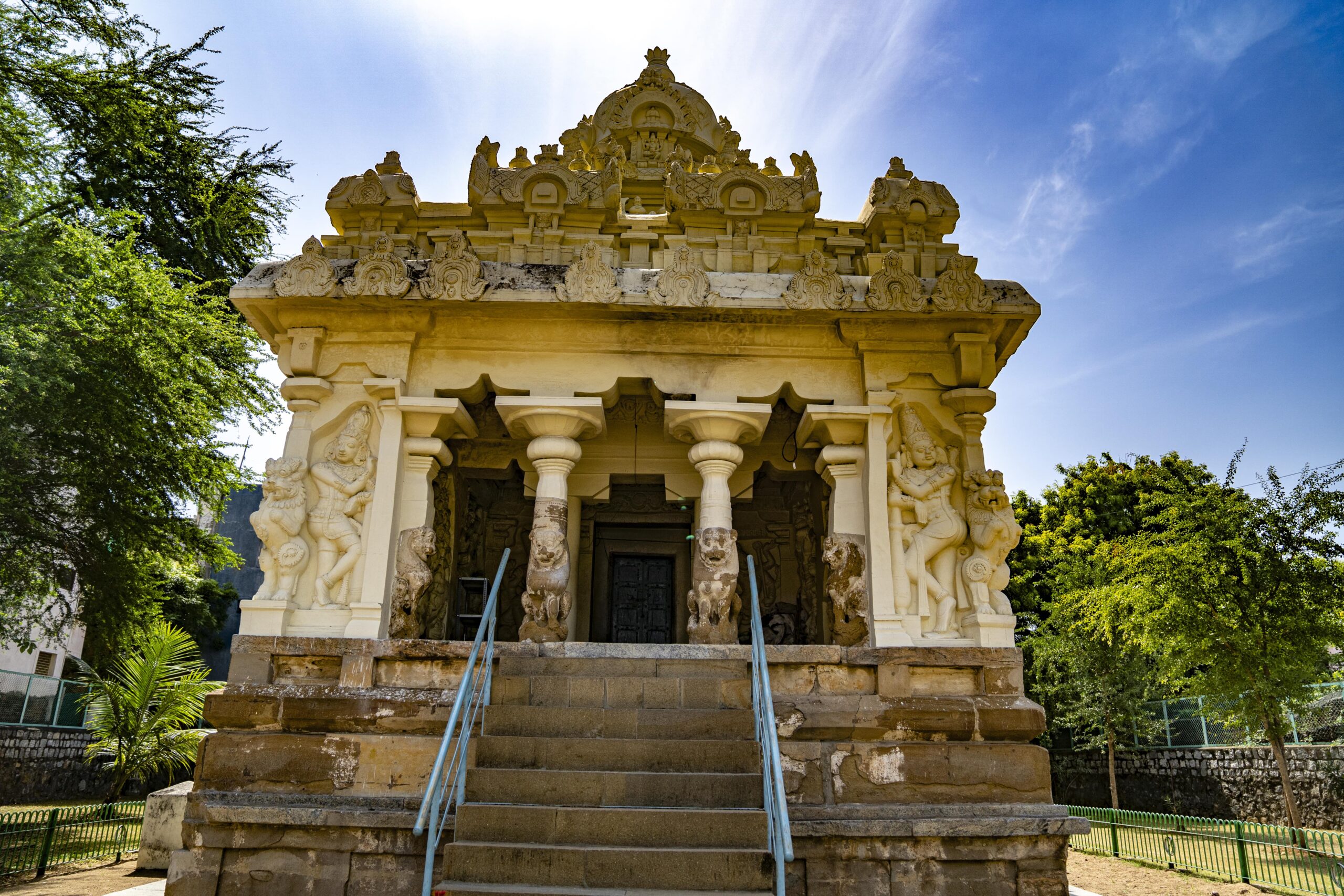
Nestled within the sacred city of Kanchipuram, Sri Muktishvara Temple, also known as Dharmasamvardhanishvaram, is an elegant Pallava-era shrine dedicated to Lord Shiva. Celebrated for its exquisite sculptures, remarkable Somaskanda panel, and the unique Sandhyanrtta Murti illuminated by the rays of the setting sun, the temple stands as a masterpiece where architecture, art, and spirituality converge in perfect harmony.
The Muktishvarara or Dharmasamvardhanishvaram Temple, an ancient place of worship steeped in history and adorned with remarkable architectural wonders. In this blog post, we will explore the temple’s fascinating features, intricate carvings, and stucco images that depict the divine manifestations of Lord Shiva.
02 / HISTORY AND SIGNIFICANCE
History and Significance
The Dharmasamvardhanishvaram Temple, with its origins dating back centuries, stands as a testament to the rich cultural heritage of the region. It derives its name from the revered inscription of Nandivarama Pallava-II, honoring the divine Dharmasamvardhanishvara. As we climb the steps leading to the temple, we are greeted by a structure elevated gracefully from the ground, setting the tone for the sacred ambiance that awaits.
03 / ARCHITECTURAL MARVELS
Architectural Marvels
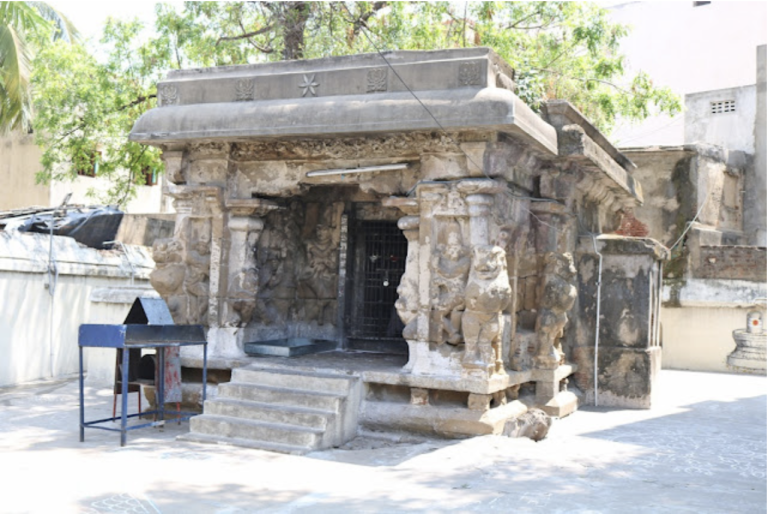
The temple’s architectural grandeur mesmerizes all who lay eyes upon it. Upon entering, we encounter the mukha mandapa and ardha mandapa, which serve as captivating preludes to the garbhagrha, where the revered Muktishvara linga is enshrined. Adorning the rear wall of the sanctum is the exquisite Somaskanda panel, a representation of Lord Shiva with Parvati and Skanda.
04 / THE SCULPTURES
The Sculptures
One of the remarkable features of the Dharmasamvardhanishvaram Temple is the presence of images that adorn its walls. These intricately crafted sculptures depict various manifestations of Lord Shiva. From the awe-inspiring Ravana-Garvabhanga murti to the dynamic Caturatandava murti and the benevolent Ravana-Anugraha murti, each image transports devotees into the divine realm. The temple also houses the mesmerizing Gangadhara murti, but the true marvel lies in the Sandhyanrtta murti.
05 / THE CRIMSON RADIANCE
The Crimson Radiance
The Sandhyanrtta murti is traditionally depicted as a crimson red hue, symbolizing the celestial dance of Lord Shiva during the twilight hours. However, the architect of this temple ingeniously positioned the murti to receive the rays of the setting sun, enhancing its crimson radiance during dusk. Witnessing this magical transformation is a breathtaking experience that evokes a deep sense of spiritual connection and reverence.
06 / CONCLUSION
Conclusion
As our journey through the Dharmasamvardhanishvaram Temple comes to a close, we carry with us the memories of its architectural marvels, intricate carvings, and the mystical aura that envelops this sacred place. The stucco images depicting Lord Shiva’s various forms and the captivating Sandhyanrtta murti hold profound spiritual significance. This temple stands as a testament to the devotion and artistic brilliance of its creators, inviting visitors to immerse themselves in the divine splendor that resides within its hallowed walls.
07 / WHY IT MATTERS
Why this place matters.
A Temple of Liberation
Dedicated to Lord Muktishvara, the temple embodies the spiritual aspiration for moksha—the ultimate liberation from the cycle of birth and death. For centuries, devotees have sought Lord Shiva's blessings here for inner peace, wisdom, and spiritual freedom.
A Pallava Architectural Gem
The temple is one of Kanchipuram's finest surviving Pallava monuments. Elevated above the surrounding ground, it preserves an elegant composition of mukha mandapa, ardha mandapa, sanctum, and beautifully executed sculptural programs that exemplify early Dravidian architecture.
A Gallery of Shiva's Divine Forms
Its walls are adorned with remarkable sculptural depictions of Lord Shiva, including Ravana Garvabhanga, Ravana Anugraha, Gangadhara, Chaturatandava, and the celebrated Sandhyanrtta Murti, offering visitors a visual journey through Shaiva mythology and philosophy.
Architecture that Celebrates Light
One of the temple's most extraordinary features is the placement of the Sandhyanrtta Murti. Carefully aligned to receive the rays of the setting sun, the sculpture glows with a crimson brilliance at dusk, demonstrating the remarkable scientific and artistic vision of Pallava architects.
08 / INSIDE THE TEMPLE
What to see inside.
The Sanctum of Muktishvara
Offer prayers before Lord Shiva as Muktishvara, whose name itself symbolizes liberation and spiritual fulfillment.
The Somaskanda Panel
Admire the beautiful Somaskanda panel behind the sanctum, portraying Lord Shiva with Goddess Parvati and Skanda—a defining iconographic feature of Pallava temples.
The Divine Sculptural Gallery
Walk around the temple to discover magnificent carvings of Shiva's many manifestations, each narrating profound episodes from Shaiva mythology through exceptional stone craftsmanship.
The Miracle of the Setting Sun
Witness the celebrated Sandhyanrtta Murti, uniquely positioned to receive the golden rays of the setting sun, creating a breathtaking visual experience that blends architecture, astronomy, and devotion.
09 / THROUGH TIME
A history in layers.
- PALLAVA PERIOD (8TH CENTURY CE)
Temple established and associated with the reign of Nandivarman II.
- PALLAVA PERIOD
Installation of the remarkable Somaskanda panel and sculptural program depicting multiple forms of Lord Shiva.
- MEDIEVAL PERIOD
Temple continues as an important Shaiva centre preserving Pallava artistic traditions.
- PRESENT DAY
Active place of worship and one of Kanchipuram's finest surviving Pallava monuments.
10 / PLAN YOUR VISIT
Plan your visit.
Timings and visitor details can change. Please confirm locally before you travel.
11 / PHOTOGRAPHS
From the whole to the detail.
Select a photograph to explore it at a larger scale.
12 / LOCATION & MAP
Place the story on the map.
PLACE THIS STORY ON THE MAP
Kanchipuram, Tamil Nadu
Tamil Nadu, India
ABOUT THIS FIELD ENTRY
Rooted in the Bharat Ke Wow archive.
This page is drawn from the Bharat Ke Wow field entry for Muktishvara Temple. Sacred narratives are presented as temple tradition.
Read the original entry ↗