

01 / INTRODUCTION
The Lord who
bestows mastery over senses
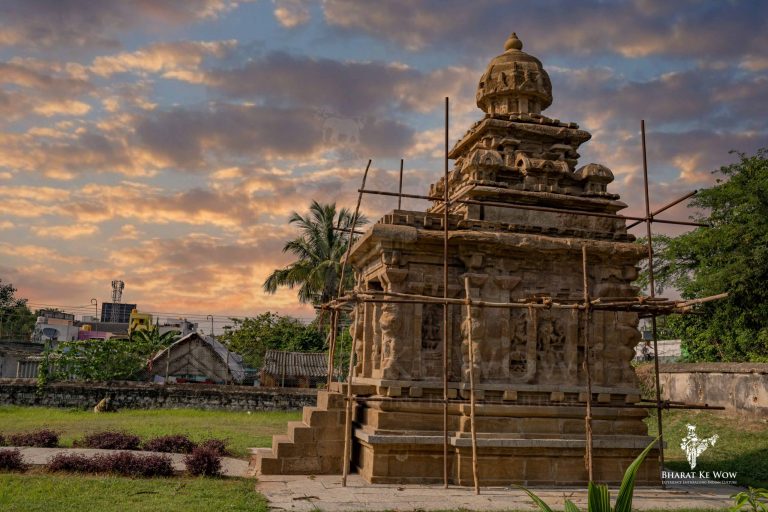
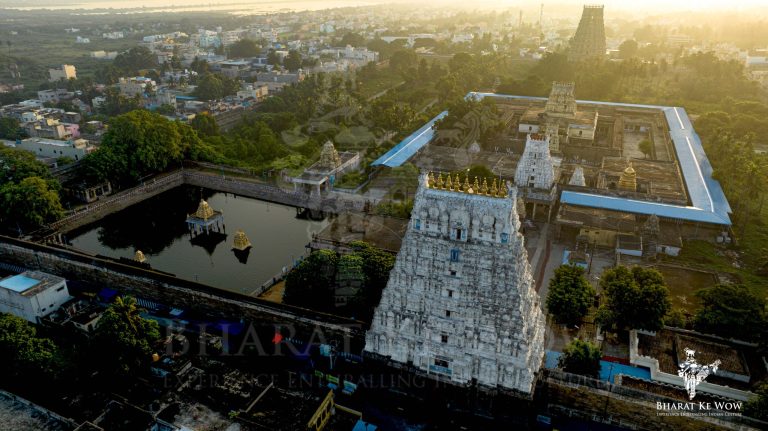
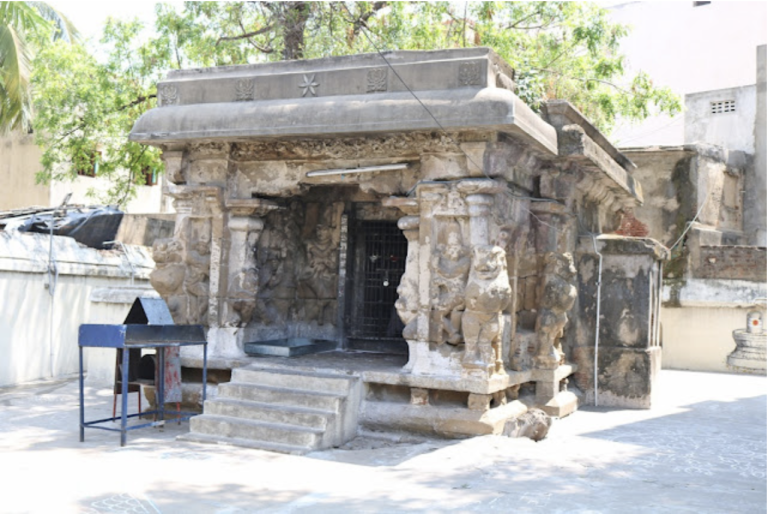
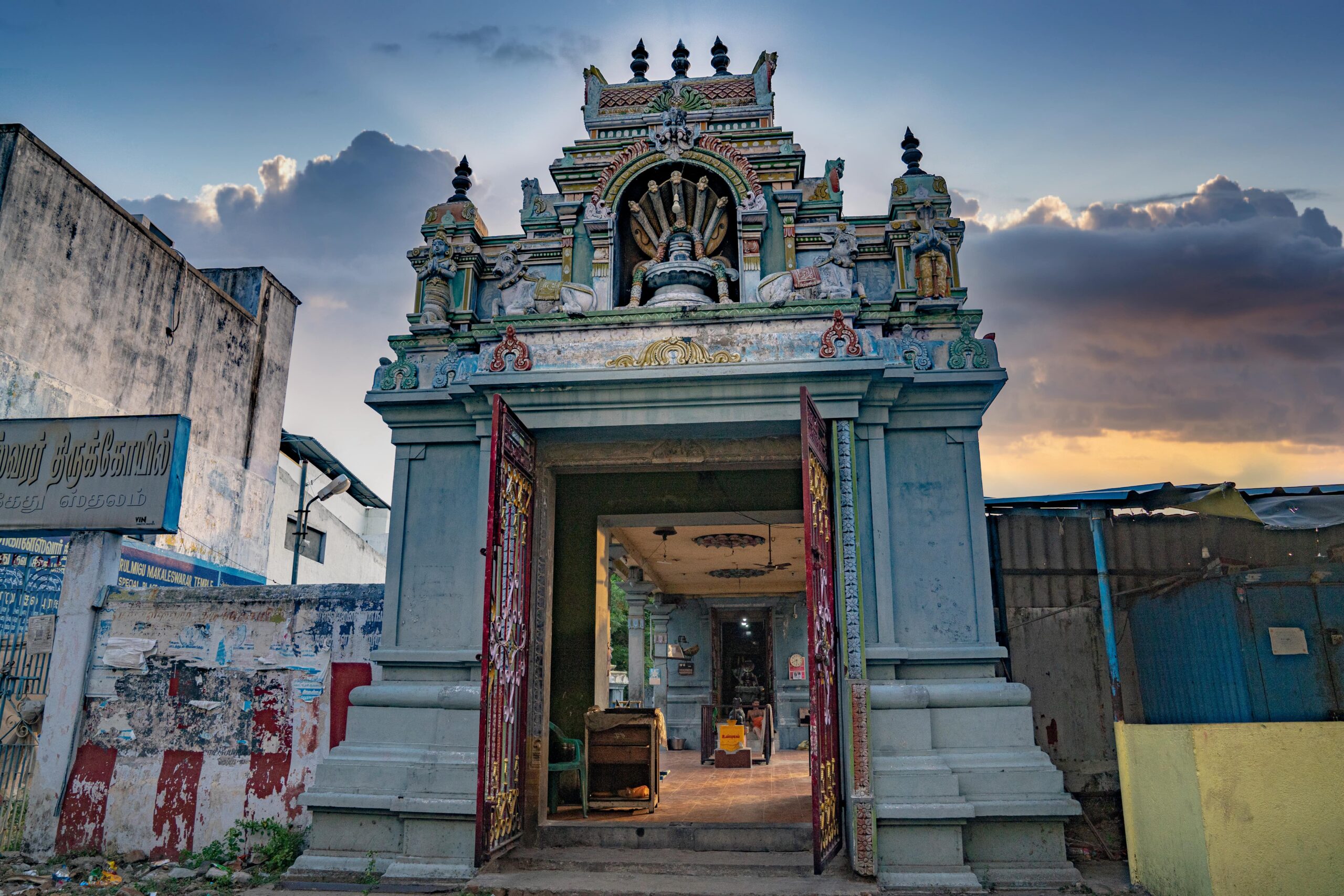
Nestled within the sacred landscape of Kanchipuram, Sri Mahakaleshvara Temple is an ancient Pallava shrine dedicated to Lord Shiva as Mahakaleshvara. Revered as one of Kanchi's important Rahu Parihara Sthalas, the temple preserves the legend of Rahu's worship of Lord Shiva, while its exquisite Somaskanda panel and elegant Pallava architecture reveal centuries of artistic and spiritual heritage.
The captivating Mahakaleshvara Temple, a hidden gem steeped in antiquity. This sacred shrine, constructed during the Pallava era and subsequently renovated in the Chola period, is a testament to the rich architectural heritage of ancient India. Join us on a spiritual voyage as we delve into the remarkable features of this temple, including the majestic Mahakala Shivalinga, the divine depictions on the Somaskanada panel, and the association with Rahu, the celestial body.
02 / THE MAJESTIC MAHAKALA SHIVALINGA
The Majestic Mahakala Shivalinga
The heart of Mahakaleshvara Temple resides within the garbhagrha, where a magnificent granite Shivalinga of Mahakala stands in all its splendor. This sacred symbol of Lord Shiva exudes a profound aura of divinity and serves as a focal point for devotees seeking spiritual solace and blessings.
03 / THE SOMASKANADA PANEL
The Somaskanada Panel
Adorning the rear wall of the temple is the illustrious Somaskanada panel, showcasing a captivating portrayal of Shiva holding Rahu and Ketu, Parvati, and Skanda, accompanied by Brahma and Vishnu. This intricate depiction signifies the harmonious interplay of cosmic forces and the eternal bond between the divine deities.
04 / RAHU'S WORSHIP AND THE MAHAKALESHVARA CONNECTION
Rahu's Worship and the Mahakaleshvara Connection
According to the Sthalapuranam, Rahu, the mythical planet, worshipped Lord Shiva in this very shrine, leading to the temple being named Mahakaleshvara. Intriguingly, a reverential depiction of a snake with a raised head can be found near the Linga, corroborating the association with Rahu. It is believed that worshipping at this sacred site provides a similar effect to the revered Rahu-parihara rituals performed at Kalahasti.
05 / SNAKE IMAGERY AND SYMBOLISM
Snake Imagery and Symbolism
The presence of the snake imagery in Mahakaleshvara Temple holds profound spiritual significance. In Hindu mythology, snakes symbolize divine energy and Kundalini, the dormant spiritual energy within individuals. The depiction of the snake in a reverential posture near the Linga serves as a powerful reminder of the potent forces of transformation and spiritual awakening.
06 / INSCRIPTIONS AND HISTORICAL SIGNIFICANCE
Inscriptions and Historical Significance
The historical heritage of Mahakaleshvara Temple is further enhanced by the presence of two inscriptions dating back to the period of Vijayaganda Gopala. These inscriptions bear witness to the generosity of devotees who gifted cattle and even a village named Kattupakkam for the temple’s upkeep, exemplifying the enduring devotion and support of the community.
Step into the hallowed grounds of Mahakaleshvara Temple and immerse yourself in the ethereal ambiance of ancient spirituality. Marvel at the grandeur of the Mahakala Shivalinga and the divine depictions on the Somaskanada panel. Embrace the mystical association with Rahu and the powerful symbolism of the snake imagery. As you explore the temple’s inscriptions, relish in the knowledge of its historical significance. May your visit to Mahakaleshvara Temple be filled with divine blessings, spiritual rejuvenation, and a profound connection with the divine.
07 / WHY IT MATTERS
Why this place matters.
Temple of Rahu's Devotion
Temple tradition narrates that Rahu performed intense worship to Lord Shiva at this sacred shrine. Because of this divine episode, Mahakaleshvara Temple became one of Kanchipuram's important destinations for devotees seeking relief from Rahu-related astrological afflictions.
A Sacred Rahu Parihara Sthala
Devotees believe that worship at Mahakaleshvara Temple offers spiritual benefits comparable to the renowned Rahu Parihara rituals performed at Kalahasti. Pilgrims visit seeking relief from obstacles, inner transformation, and planetary afflictions.
Pallava Architectural Heritage
The temple preserves the elegant simplicity of Pallava architecture while incorporating later Chola renovations. Its sanctum, mandapas, and sculptural details provide valuable insight into the evolution of South Indian temple architecture.
Symbolism of Spiritual Awakening
The serpent imagery surrounding the sanctum symbolizes Kundalini, transformation, and spiritual awakening. Together with the magnificent Somaskanda panel, the temple presents profound philosophical ideas through sacred art.
08 / INSIDE THE TEMPLE
What to see inside.
The Sanctum of Mahakaleshvara
Receive darshan of the magnificent granite Shiva Linga worshipped as Mahakaleshvara, embodying the Lord's power to remove fear, ignorance, and spiritual obstacles.
The Legend of Rahu
Discover the fascinating temple tradition that recounts Rahu's worship of Lord Shiva and understand why the shrine is regarded as an important Rahu Parihara Sthala.
The Somaskanda Panel
Admire the remarkable sculptural panel depicting Shiva together with Parvati, Skanda, Brahma, Vishnu, Rahu, and Ketu, an extraordinary representation of cosmic harmony.
Pallava Heritage
Explore the elegant architectural features established during the Pallava period and enhanced by later Chola renovations, preserving centuries of sacred craftsmanship.
09 / THROUGH TIME
A history in layers.
- MYTHOLOGICAL ERA
Rahu performs penance and worships Lord Shiva at this sacred site.
- PALLAVA PERIOD
Temple constructed with its original sanctum and architectural features.
- CHOLA PERIOD
Temple renovated and expanded while preserving its Pallava core.
- LATER MEDIEVAL PERIOD
Inscriptions of Vijayaganda Gopala record donations of cattle and land to the temple.
- PRESENT DAY
Active Shaiva shrine and revered Rahu Parihara Sthala attracting devotees throughout the year.
10 / PLAN YOUR VISIT
Plan your visit.
Timings and visitor details can change. Please confirm locally before you travel.
11 / PHOTOGRAPHS
From the whole to the detail.
Select a photograph to explore it at a larger scale.
12 / LOCATION & MAP
Place the story on the map.
PLACE THIS STORY ON THE MAP
Kanchipuram, Tamil Nadu
Tamil Nadu, India
ABOUT THIS FIELD ENTRY
Rooted in the Bharat Ke Wow archive.
This page is drawn from the Bharat Ke Wow field entry for Mahakaleshvara Temple. Sacred narratives are presented as temple tradition.
Read the original entry ↗