


01 / INTRODUCTION
A sacred world,
held within a temple.
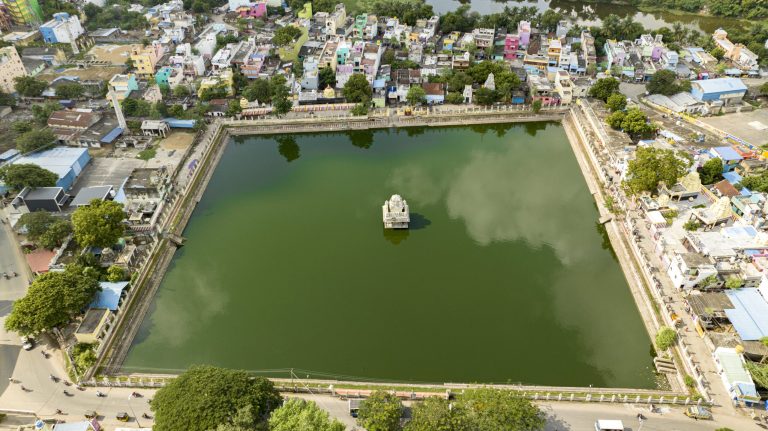
In the Vishnukanchi quarter of Kanchipuram, Varadaraja Perumal Temple brings together the devotion of a Divyadesam and the richness of a historical archive.
Dedicated to Vishnu as Sri Varadaraja, the shrine is counted among the 108 Sri Vaishnava Divyadesams revered by the Alvars. Its significance unfolds at several scales: in the presence of the deity, in the stories attached to Hastigiri, and in the sculptures, paintings, and inscriptions that hold the memory of successive generations.
To explore this temple is to move between sacred narrative and material history. Each offers a different way of understanding a place that continues to be lived, worshipped in, and remembered.
02 / SACRED NARRATIVES
A vision on Hastigiri.
The temple’s sthalapurana places Brahma’s longing for a vision of Vishnu at the heart of its origin story.
In the narrative recounted by the Bharat Ke Wow entry, Brahma wishes to behold Vishnu in his four-armed form. His penance first brings a manifestation as sacred water, and then as a forest associated with the earth. Still seeking the form he desires, he is directed towards the performance of Ashvamedha sacrifices at Kanchi.
The story culminates in a sacrifice on Hastigiri. Vishnu emerges from its fire as an archavatara—the divine made present in an image—and grants Brahma the vision he sought.

A NOTE ON READING
A sthalapurana is a sacred narrative of place. Here, it is presented as temple tradition, alongside the architectural and inscriptional record.
The elephant hill & the many names of Vishnu
The source also relates the rescue of Gajendra, the elephant devotee, from a crocodile, connecting this sacred landscape with Vishnu’s compassion. Names such as Karigirisa and Gajendragirinatha recall the elephant hill; Devadhi Devaraja, Devaraja Swami, Pranatartihara, Kari Varada, and Manikkavarada express other devotional ways of addressing the deity.
03 / ARCHITECTURE & ARTISTRY
Many hands.
A continuing creation.
The existing field entry attributes the temple’s beginnings to the Pallava period, with a proposed ninth-century origin. It describes subsequent expansion and renovation under Chola, Pandya, Vijayanagara, Nayaka, and other patrons. These layers are best read as a history of continuing additions, rather than a single moment of construction.
Sculpture that rewards attention
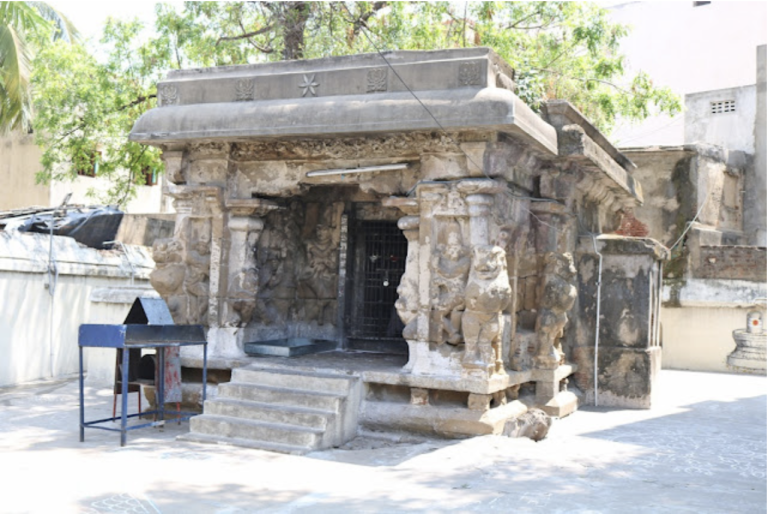
The stone and metal icons described in the entry reflect Chola and Vijayanagara traditions. In the mandapas, sculptural detail becomes a way of reading the temple’s changing artistic language.
Stories across the pillars
The source describes more than 800 pillar reliefs in the kalyana mandapa, many carrying puranic themes. Look at each figure, gesture, and arrangement as part of a larger narrative.
A painted sacred geography
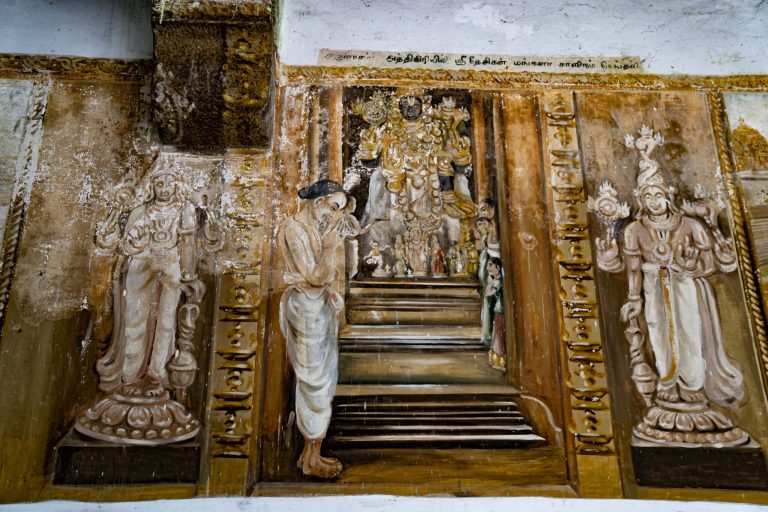
Vijayanagara paintings on the outer verandah walls depict the sthalapurana, Alvars, Acharyas, and presiding deities of different Divyadesams—bringing a wider devotional world into the temple.
Pallava · Chola · Pandya · Vijayanagara · Nayaka
04 / INSCRIPTIONS
The temple as a historical record.
inscriptions reported
in the source entry
Beyond its sacred narratives, Varadaraja Perumal Temple preserves an inscriptional record of Kanchipuram across centuries. The Bharat Ke Wow article reports approximately 350 inscriptions, offering evidence of historical events and changing political relationships.
The dynasties and ruling houses named in the entry include the Cholas, Pandyas, Telugu Chodas, Kadavarayas, Cheras, Kakatiyas, Sambuvarayas, Hoysalas, and Vijayanagara rulers.
A useful distinction: a dynasty named in an inscription is not automatically the builder of every structure around it. Patronage, rebuilding, and recorded events are different layers of a temple’s history.
05 / LIVING TRADITIONS
Devotion, carried across generations.
Varadaraja & Atti-Varadar
The source distinguishes the present central granite image from an earlier wooden form made from the Atti tree, identified in the article as Ficus glomerata. This wooden form is remembered as Atti-Varadar, preserving a connection between the deity’s name, material, and sacred history.
Teachers, poets & a shared inheritance
Thirumangai Alvar, Tirukkacchi Nambi, Ramanujacharya, and Doddachariar are among the Vaishnava personalities associated with the temple in the original entry. These connections place the shrine within a continuing world of poetry, teaching, service, and devotion.
History is not only what a temple has witnessed.
It is also what a community continues to carry.
06 / PHOTOGRAPHS
From the whole to the detail.
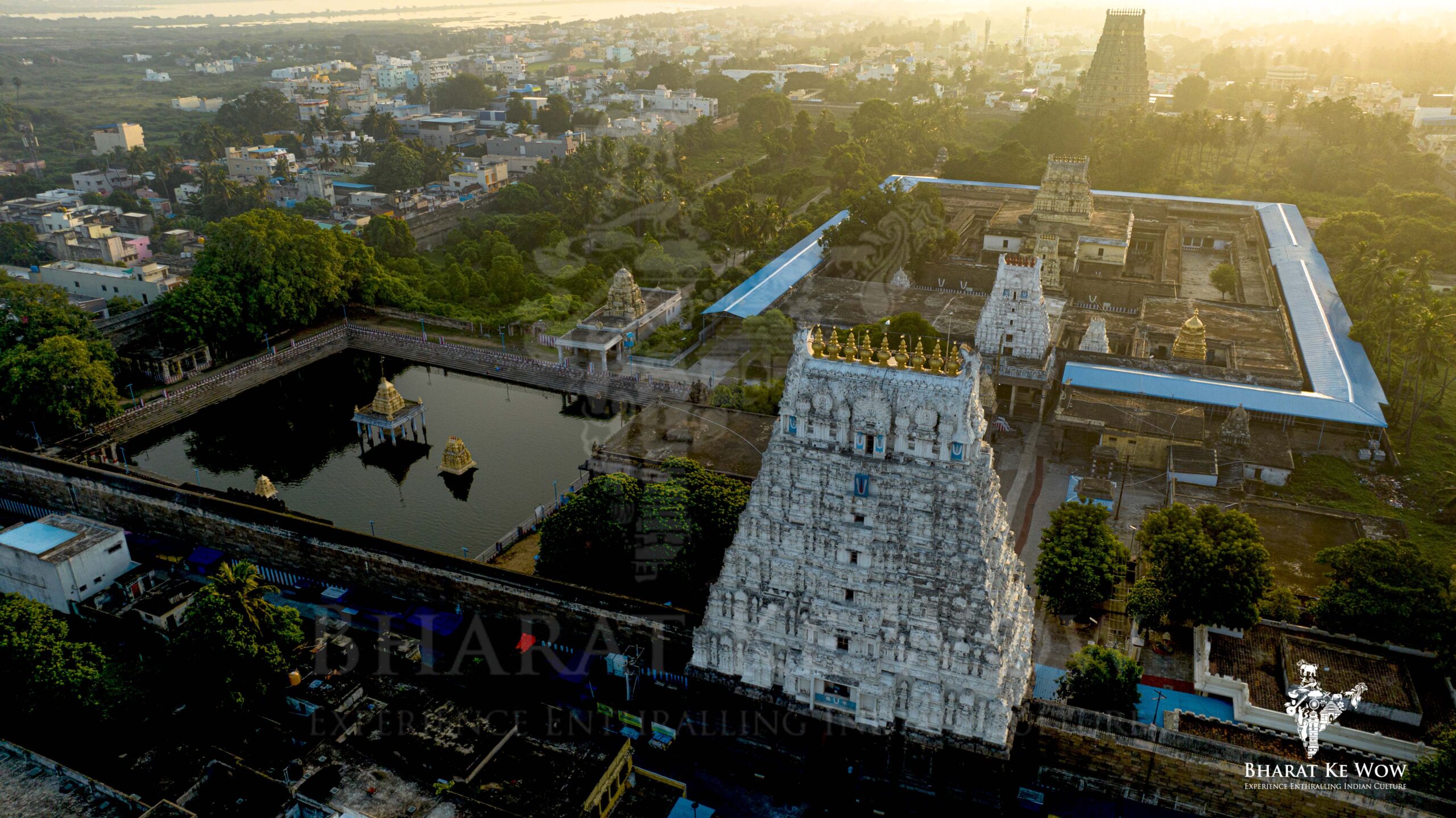
Three perspectives on the same sacred place. Select a photograph to explore it at a larger scale.
Aerial: Bharat Ke Wow. Pillared hall: Vinayaraj, CC BY-SA 4.0. Stone chain: Tshrinivasan, CC BY-SA 3.0. Source links accompany each enlarged image.
07 / LOCATION & MAP
Place the story on the map.
PLACE THIS STORY ON THE MAP
Vishnu Kanchi, Kanchipuram
Tamil Nadu, India
ABOUT THIS FIELD ENTRY
Rooted in the Bharat Ke Wow archive.
This entry reorganizes the existing Varadaraja Perumal Temple article. Sacred narratives are identified as tradition; historical attributions and reported counts follow that article and await editorial review.
Read the original entry ↗EDITORIAL REVIEW PENDING