


01 / INTRODUCTION
Serpent Guardians and
Divine Grace
Situated along the northern bank of the Vegavati River in Kanchipuram, Sri Panamudishvarar Temple is an ancient shrine dedicated to Lord Shiva as Phanadharishvara—the Lord adorned with serpents. Revered as a sacred center for Naga worship and a powerful Rahu–Ketu Parihara Sthala, the temple combines Chola architecture, profound mythology, and enduring traditions of spiritual protection and healing.
The serene realm of Panamudishvarar Temple, a sacred abode nestled along the northern bank of the Vegavati River in Kanchipuram. We embark on a spiritual journey to unravel the legends, architectural wonders, and divine connections associated with this ancient temple. From the worship of Nagas to the serpent guardians that protect the temple, prepare to be captivated by the mystical allure of Panamudishvarar.
02 / THE LEGEND OF NAGA WORSHIP
The Legend of Naga Worship
Panamudishvarar Temple holds a profound connection with Naga worship, as per the sthalapurana (local legend). It is believed that the temple served as a sanctuary for the Nagas, who sought relief from their fear of Garuda, the celestial bird. This sacred haven became a place of solace and reverence, intertwining the serpentine deities with the divine grace of Lord Shiva.
03 / PHANADHARISHVARA: THE LORD OF SERPENTS
Phanadharishvara: The Lord of Serpents
At Panamudishvarar Temple, Lord Shiva is worshipped as Phanadharishvara, which translates to “the one who wears snakes as ornaments.” The name derives from “phana” meaning hood and “phanadhara” referring to the serpents with hoods. Explore the significance of this unique epithet and the portrayal of Lord Shiva adorned by serpents within the temple complex.
04 / ARCHITECTURAL MARVELS
Architectural Marvels
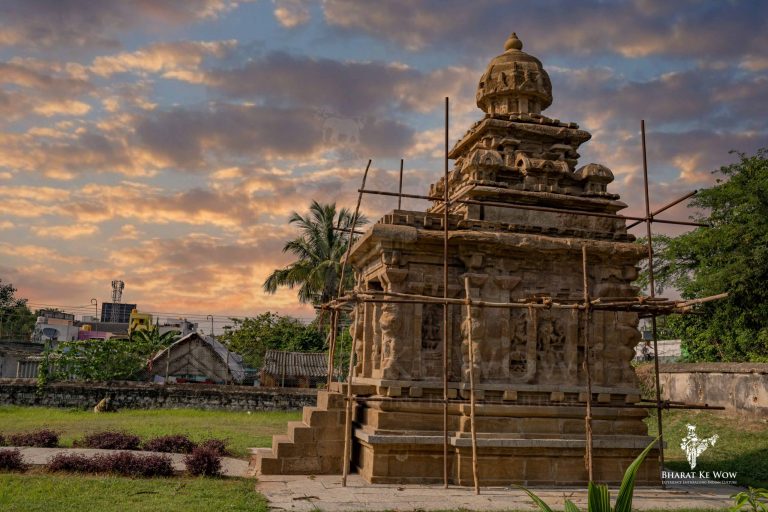
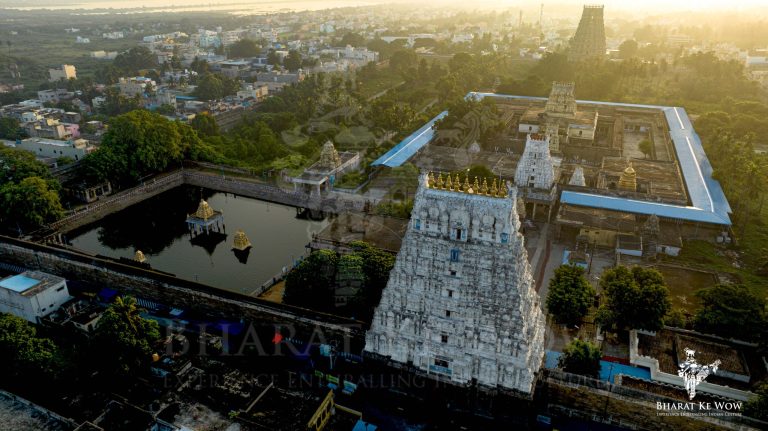
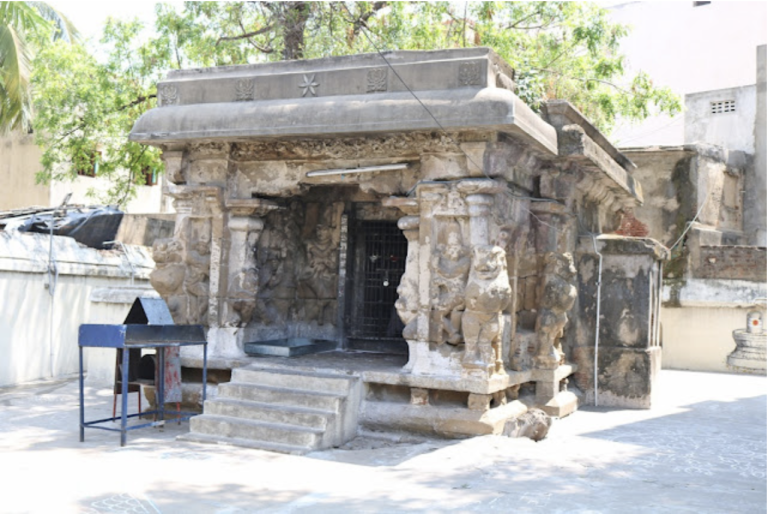
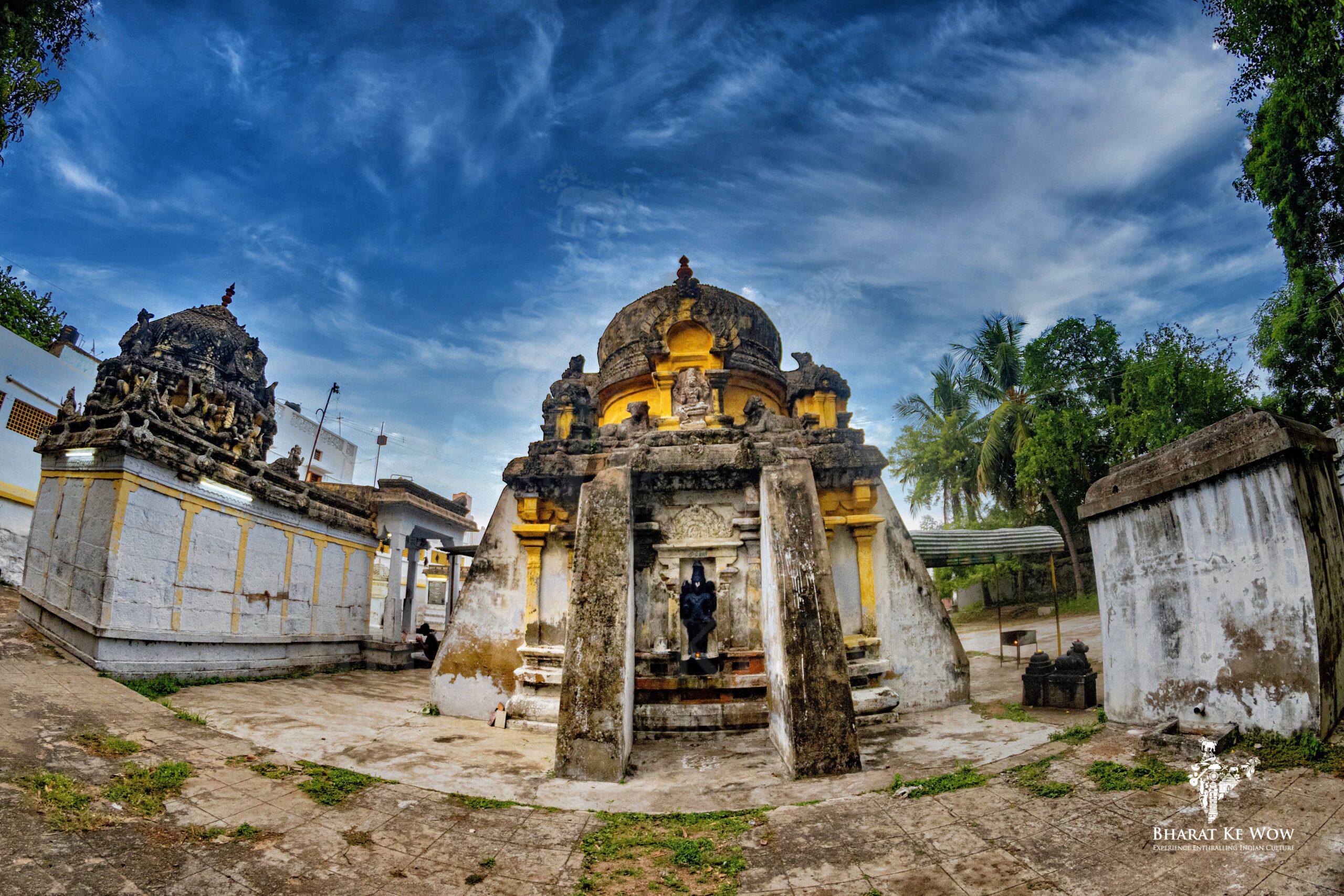
The temple structure, facing east, boasts a two-tier Rajagopura, welcoming devotees into its sacred premises. Its layout encompasses a garbhagrha, antarala, ardha-mandapa, and maha-mandapa. The garbhagrha stands on a simple padabandha adhisthana adorned with tripatta kumuda. Discover the artistry of the sandstone sculptures within the koshtas surrounding the garbhagrha, depicting deities such as Ganesha, Dakshinamurti, Mahavishnu, Brahma, and Durga. Explore the separate shrines within the ardha-mandapa, dedicated to various divine beings like Nataraja, Siddhishvara, Varasiddhi Vinayaka, Kalahastishvara, Sri Valli Devasena Subramanya, Navagrahas, Shanishvara, Mahavishnu, Bhairava, and Surya.
05 / SERPENT GUARDIANS AND SPIRITUAL REMEDIES
Serpent Guardians and Spiritual Remedies
Panamudishvarar Temple is closely associated with sarpa-dosha parihara, providing solace to those seeking remedies for afflictions related to serpents. It is also considered a Raghu & Kethu Parihara sthala. The temple houses two additional lingas, Rahulinga and Ketulinga, which are believed to transform into snakes during the night, acting as vigilant guardians of the sacred space.
06 / TALES OF DIVINE OFFERINGS
Tales of Divine Offerings
According to another captivating legend, Vasuki, one of the revered Ashtanaga (eight sacred snakes), worshipped Lord Shiva in this temple, offering Nagamani (serpentine gems) from his hoods. Delve into the significance of this divine offering and the enduring bond between Lord Shiva and the serpentine deities.
07 / HISTORICAL SIGNIFICANCE
Historical Significance
Panamudishvarar Temple holds historical significance, attributed to its construction during the 10th century under the patronage of Sundara Chola, a mighty ruler of the Chola dynasty. Scholars believe that the temple’s present structure reflects the architectural finesse of that era. Explore the inscriptions found on the north side wall of the mandapam, dating back to the 12th century, which reverently refer to Lord Shiva as ‘Padamudaya Nayanar.’
08 / CONCLUSION
Conclusion
As we conclude our exploration of Panamudishvarar Temple, we leave behind the tranquil ambiance, the ancient legends, and the architectural splendor that make this sacred site truly remarkable. From the devotion of the Nagas to the divine grace of Phanadharishvara, this temple continues to be a haven of spirituality and protection. Join us as we embrace the mystical embrace of Panamudishvarar, where serpents and gods converge in eternal harmony.
09 / WHY IT MATTERS
Why this place matters.
Sanctuary of the Nagas
Temple tradition states that the Nagas sought refuge here from Garuda, making this shrine one of the foremost centers of serpent worship in Kanchipuram.
Lord of the Serpents
Lord Shiva is worshipped here as Phanadharishvara, 'The Lord who wears hooded serpents as ornaments,' symbolizing mastery over fear, death, and hidden cosmic energies.
Rahu–Ketu Parihara Sthala
The temple is widely revered for rituals that help alleviate Sarpa Dosha, Rahu Dosha, Ketu Dosha, and related astrological afflictions.
A Temple of Divine Guardians
The sacred Rahulinga and Ketulinga are traditionally believed to assume the form of serpents at night, serving as eternal guardians of the temple.
10 / INSIDE THE TEMPLE
What to see inside.
The Main Sanctum
Receive darshan of Lord Panamudishvarar, worshipped as Phanadharishvara—the Lord adorned with sacred serpents.
The Naga Legends
Learn the fascinating legend of the Nagas who found refuge in this temple and offered their devotion to Lord Shiva.
The Sacred Rahulinga & Ketulinga
Visit the unique shrines associated with Rahu and Ketu, believed to offer relief from astrological afflictions and serpent-related doshas.
The Chola Architecture
Admire the elegant temple layout consisting of the Garbhagriha, Antarala, Ardha Mandapa, and Maha Mandapa, showcasing early Chola craftsmanship.
11 / THROUGH TIME
A history in layers.
- MYTHOLOGICAL ERA
The Nagas seek refuge at this sacred site and worship Lord Shiva; Vasuki offers Nagamanis to the deity.
- 10TH CENTURY CE
Temple believed to have been constructed under the patronage of Sundara Chola.
- 12TH CENTURY CE
Inscriptions refer to the deity as "Padamudaya Nayanar," reflecting continued patronage.
- MEDIEVAL PERIOD
The temple gains prominence as a Sarpa Dosha and Rahu–Ketu Parihara Sthala.
- PRESENT DAY
Continues as an active pilgrimage center for devotees seeking relief from serpent-related and astrological afflictions.
12 / PLAN YOUR VISIT
Plan your visit.
Timings and visitor details can change. Please confirm locally before you travel.
13 / PHOTOGRAPHS
From the whole to the detail.
Select a photograph to explore it at a larger scale.
14 / LOCATION & MAP
Place the story on the map.
PLACE THIS STORY ON THE MAP
Northern bank of the Vegavati River, Kanchipuram, Tamil Nadu
Tamil Nadu, India
ABOUT THIS FIELD ENTRY
Rooted in the Bharat Ke Wow archive.
This page is drawn from the Bharat Ke Wow field entry for Panamudishvarar Temple. Sacred narratives are presented as temple tradition.
Read the original entry ↗