

01 / INTRODUCTION
The Lord The Selfless Protector of
the World
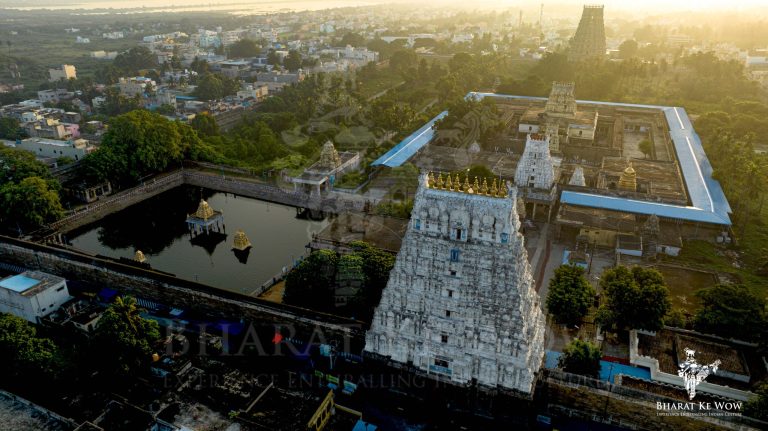
Nestled in the sacred city of Kanchipuram, Sri Manikantishvara Temple commemorates one of the most profound episodes in Hindu mythology, the Halahala Pana, where Lord Shiva consumed the deadly poison that emerged during the churning of the cosmic ocean. Worshipped here as Manikantishvara, the blue-throated Lord embodies supreme compassion, sacrifice, and the selfless protection of all creation.
Embark on a spiritual journey to the revered Manikantishvara Temple in Kanchipuram, where legends of Lord Shiva’s divine leelas and selfless acts unfold. Among the many temples in this sacred city, the Manikantishvara Temple holds a significant place, with tales of celestial serpents, churning the milky ocean, and the remarkable ‘halahala pana’ episode. Join us as we delve into the captivating narratives and explore the architectural marvels and divine entities residing within this ancient shrine.
02 / THE 'HALAHALA PANA' - LORD SHIVA'S SELFLESS ACT
The 'Halahala Pana': Lord Shiva's Selfless Act
Legend has it that during the cosmic endeavor to churn the milky ocean to obtain the elixir of life, a deadly poison known as halahala emerged instead. The magnitude and destructive potential of the poison threatened the existence of the entire world. In their distress, the celestial beings and demons fervently invoked Lord Shiva for salvation. Responding to their prayers, Lord Shiva fearlessly consumed the poison to protect the world. To prevent the poison from spreading, Goddess Parvati held his throat, turning it blue and giving him the name Nilakantha or Manikantha.
03 / THE INSTALLATION AND WORSHIP
The Installation and Worship
Impressed by Lord Shiva’s selflessness, the celestial deities, accompanied by Brahma, Vishnu, and the serpent Vasuki, descended to Earth. They established a sacred Shiva Linga at this site, the Manikantishvara Temple, to worship and honor Lord Shiva. The temple’s main deity faces west, representing Sadyojata murti, with the entrance located on the southern side.
04 / ARCHITECTURAL MARVELS AND DIVINE ENTITIES
Architectural Marvels and Divine Entities
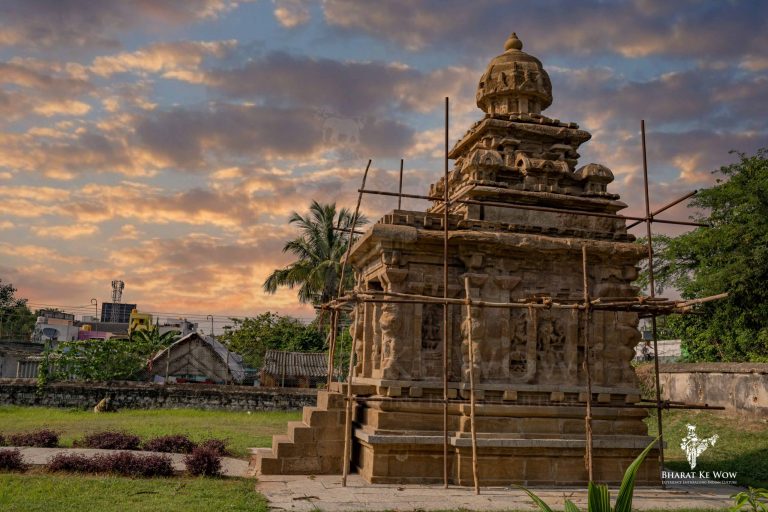
The Manikantishvara Temple showcases a fascinating blend of architectural styles, reflecting its origins in the Pallava era and subsequent renovations by the Cholas. The garbhagrha, antarala, ardha-mandapa, and maha-mandapa form the temple’s structure. The two-tier Vesara vimana within the garbhagrha is notable for its direct transition from prastara without a separate Bhumi Desha.
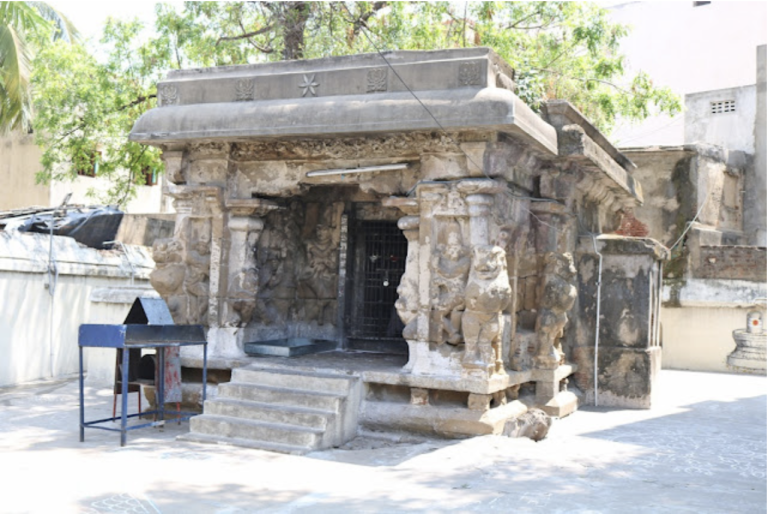
As devotees traverse the temple, they encounter various divine entities adorning the surroundings. Stucco images of Shiva and Parvati as Rishabharudha welcome visitors at the entrance of the maha-mandapa. The ardha-mandapa features unique depictions of Chandra and Surya, symbolizing the moon and sun. Additionally, the Koshtas surrounding the Garbhagrha showcase intricately carved images of Durga, Brahma, Mahavishnu, Dakshinamurti, and Ganesha.
05 / A TAPESTRY OF DEVOTION AND WORSHIP
A Tapestry of Devotion and Worship
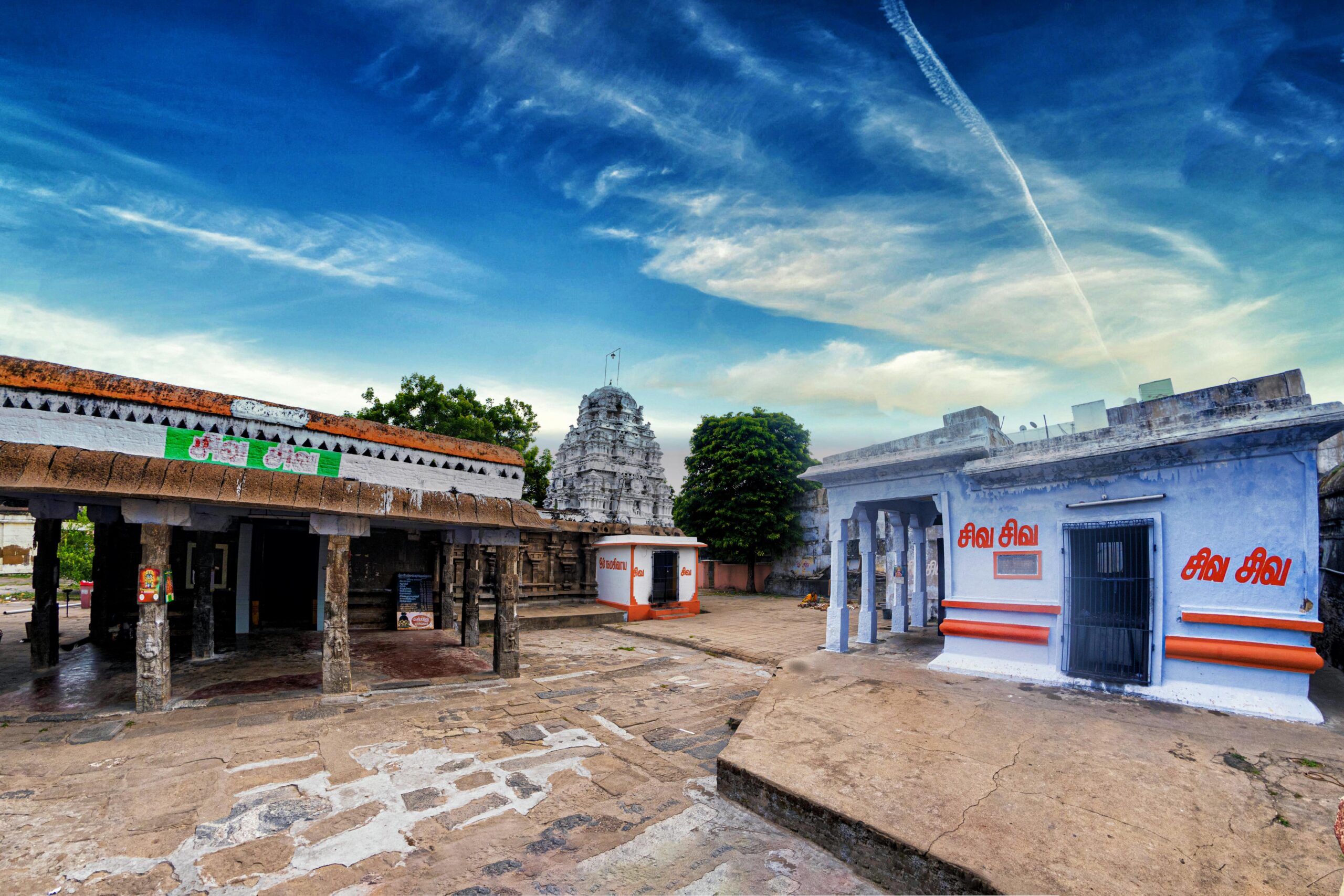
Within the prakara or circumambulatory passage, devotees can revel in the divine presence of various deities. Witness the magnificence of Ganesha, Sri Valli Devasena Subramanya, Ganesha with Nagabandha, Markandeya, Bhairava, Padavettamman, Sundrambal, Phanamanishvara, and Kanikandishvara. Each entity represents unique aspects of the divine cosmic forces and offers devotees an opportunity for spiritual connection and enlightenment.
06 / CONCLUSION
Conclusion
The Manikantishvara Temple stands as a testament to the timeless devotion and divine grace bestowed upon humanity. Through the awe-inspiring tale of Lord Shiva’s ‘halahala pana’ and the captivating presence of various deities, this sacred shrine embodies selflessness, protection, and spiritual awakening. As you explore the temple’s architectural wonders and immerse yourself in the divine ambiance, may you find solace, enlightenment, and a deep connection with the eternal divine forces that govern our universe.
07 / WHY IT MATTERS
Why this place matters.
Temple of the Cosmic Protector
Manikantishvara Temple celebrates one of Lord Shiva's greatest acts of compassion. During the churning of the Ocean of Milk, Shiva willingly consumed the deadly Halahala poison to save all creation, becoming the eternal protector of the universe.
Birth of the Blue-Throated Lord
Temple tradition recalls how Goddess Parvati gently held Shiva's throat to prevent the poison from spreading through his body. His throat turned blue, giving rise to the revered forms Nilakantha and Manikantishvara, symbols of sacrifice and divine grace.
Worship by the Celestial Gods
Following Shiva's cosmic sacrifice, Brahma, Vishnu, Vasuki, and the celestial beings are believed to have consecrated the Shiva Linga at this sacred site in gratitude, making the temple a place of universal reverence.
A Living Heritage of Shaiva Worship
With its Pallava foundations, Chola renovations, and numerous subsidiary shrines, the temple continues to preserve centuries of uninterrupted worship while showcasing the evolution of South Indian temple architecture.
08 / INSIDE THE TEMPLE
What to see inside.
The Sanctum of Manikantishvara
Offer prayers before Lord Shiva, worshipped as the compassionate protector who accepted the cosmic poison to preserve all creation.
The Halahala Legend
Discover the dramatic episode of Samudra Manthana and understand why Shiva's self-sacrifice remains one of the most powerful symbols of compassion in Hindu tradition.
Pallava and Chola Architecture
Explore the temple's elegant combination of Pallava foundations and Chola renovations reflected in its sanctum, mandapas, and vimana.
The Divine Sculptures
Admire beautifully carved images of Dakshinamurti, Durga, Brahma, Vishnu, Ganesha, Surya, Chandra, and other deities that enrich the temple's sacred landscape.
09 / THROUGH TIME
A history in layers.
- MYTHOLOGICAL ERA
Lord Shiva consumes the Halahala poison during the churning of the Ocean of Milk.
- MYTHOLOGICAL ERA
Brahma, Vishnu, Vasuki, and the celestial beings consecrate the Shiva Linga in gratitude.
- PALLAVA PERIOD
Temple established with its original architectural core.
- CHOLA PERIOD
Temple expanded and renovated with additional mandapas and shrines.
- PRESENT DAY
Active place of worship preserving the legend of Shiva's cosmic sacrifice.
10 / PLAN YOUR VISIT
Plan your visit.
Timings and visitor details can change. Please confirm locally before you travel.
11 / PHOTOGRAPHS
From the whole to the detail.
Select a photograph to explore it at a larger scale.
12 / LOCATION & MAP
Place the story on the map.
PLACE THIS STORY ON THE MAP
Kanchipuram, Tamil Nadu
Tamil Nadu, India
ABOUT THIS FIELD ENTRY
Rooted in the Bharat Ke Wow archive.
This page is drawn from the Bharat Ke Wow field entry for Manikantishvara Temple. Sacred narratives are presented as temple tradition.
Read the original entry ↗