

01 / INTRODUCTION
The Temple that
saved Kanch
Standing as the oldest surviving structural temple of Kanchipuram, Sri Kailasanatha Temple is the crowning achievement of Pallava architecture. Built by King Rajasimha Pallava in the early 8th century CE, the temple is an extraordinary monument to Lord Shiva, celebrated for its exquisite sandstone sculptures, pioneering Dravidian architecture, and the inspiring legend of Poosalaar Nayanar. Every stone reflects the artistic genius and spiritual vision of one of South India's greatest temple builders.
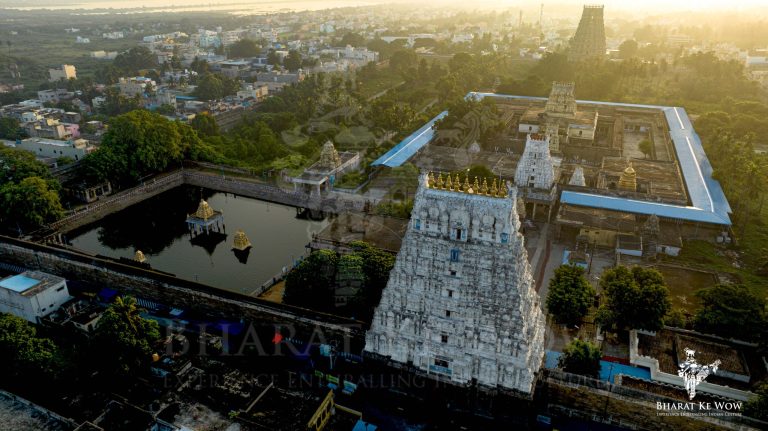
The Kailasanatha Temple, located in the Shiva Kanchi section of Kanchipuram, is a mesmerizing masterpiece of ancient architecture. Constructed by Rajasimha Pallava, a prolific builder and devotee of Lord Shiva, this temple stands as one of the earliest structural temples in the region. With its ornate design, rich sculptures, and spiritual significance, the Kailasanatha Temple offers a captivating journey into the past. Let us delve into the fascinating details of this temple and discover its architectural wonders and legendary tales.
02 / RAJASIMHA PALLAVA AND THE KAILASANATHA TEMPLE
Rajasimha Pallava and the Kailasanatha Temple
Rajasimha, also known as Narasimhavarma-II, was a visionary builder and an ardent follower of the Shaivaite path. The epithets inscribed within the temple precinct extol his devotion to Lord Shiva and his love for Epics. The Kailasanatha Temple, built in 700 CE, reflects Rajasimha’s religious leanings and adherence to the Agamas and Vastu Sastra. This royal shrine, constructed in sandstone, showcases the brilliance of ancient craftsmanship.
03 / THE LEGEND OF POOSALAAR NAYANAR
The Legend of Poosalaar Nayanar
An intriguing legend associated with the Kailasanatha Temple revolves around Poosalaar Nayanar, a revered Shaivite saint and contemporary of Rajasimha Pallava. When Poosalaar desired to build a temple for Lord Shiva, he faced challenges in finding patrons. Undeterred, he envisioned the grandest temple in his mind and fixed a date for the Kumbhabhisheka, the consecration ceremony. However, this coincided with the Kumbhabhisheka of the Kailasanatha Temple. Lord Shiva appeared in King Rajasimha’s dream, requesting the postponement of the ceremony to grace Poosalaar’s temple. The king, moved by Poosalaar’s devotion, celebrated the Kumbhabhisheka of the Kailasanatha Temple in the presence of Poosalaar.
04 / ARCHITECTURAL MARVELS OF THE KAILASANATHA TEMPLE
Architectural Marvels of the Kailasanatha Temple
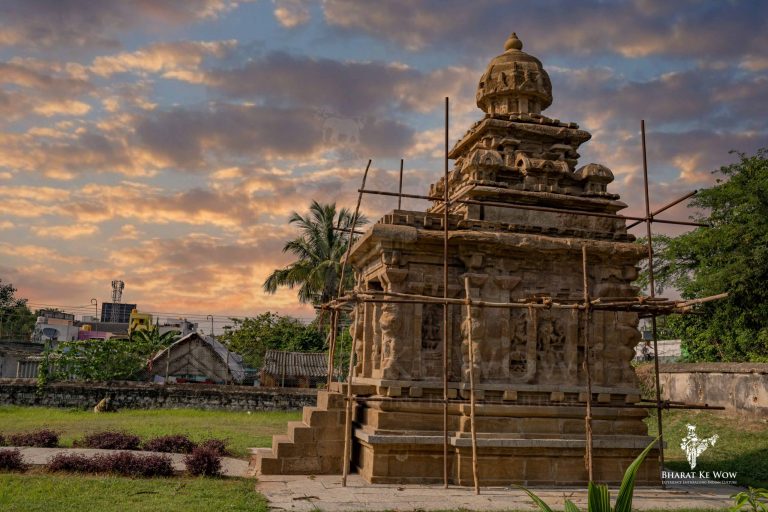
The Kailasanatha Temple, facing east, follows a rectangular plan and features four stories. The square structure up to the griva (neck) is surmounted by an octagonal sikara. The temple is adorned with nine abutting sub-shrines, of which seven are visible from outside. These sub-shrines showcase various representations of Lord Shiva, meticulously carved in the unique Pallava style. The Garbhagrha, guarded by dvarapalakas (doorkeepers), houses the Kailashanatha linga—a large, polished Dharalinga with sixteen facets. The rear wall of the sanctum boasts the awe-inspiring Somaskanda panel, depicting Lord Shiva, Uma, Skanda, Brahma, and Vishnu.
05 / UNIQUE FEATURES AND ARTISTIC DETAILS
Unique Features and Artistic Details
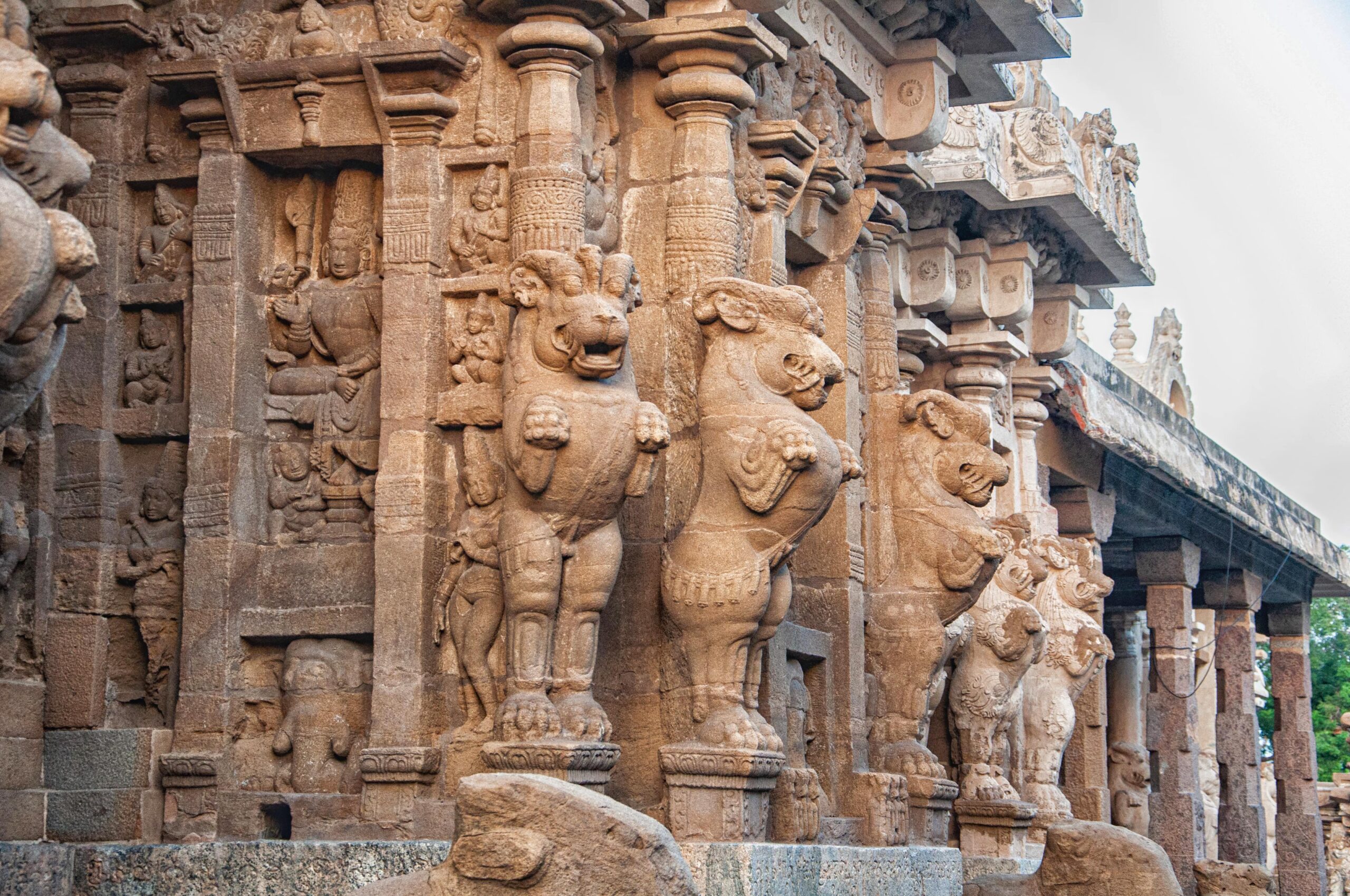
The Kailasanatha Temple exhibits remarkable architectural and engineering marvels. The narrow circumambulatory passage surrounding the garbhagrha, known as Svarga-pradakshina, symbolizes liberation from rebirth for devotees who crawl through it. The superstructural talas, constructed over a bridge of slabs, demonstrate the artists’ exceptional engineering skills. The temple also features a series of Nandis, placed on the ground and facing different quarters. Every inch of the temple is adorned with intricate sculptures, including the Gajalakshmi and the eleven manifestations of Shiva (Ekadasa Rudras), showcasing the artistic excellence of the Pallava craftsmen.Preservation and Cultural Significance
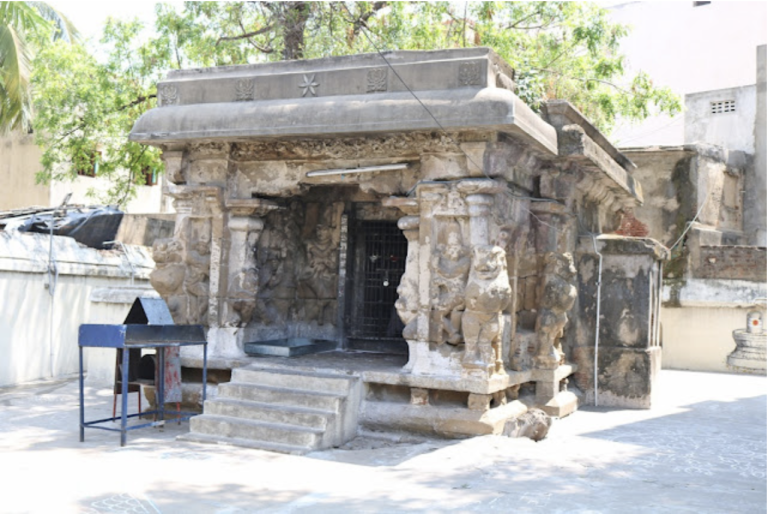
The Kailasanatha Temple has endured the test of time, remaining a testament to ancient art and spirituality. Its outer walls and devakoshtas house remarkable sculptures, while the inner prakara showcases 55 parivara shrines of Shiva, some of which bear traces of fresco paintings. The temple’s stability and water resistance are ensured by granite slabs engraved with Pallava grantha characters, enumerating the titles of Rajasimha Pallava. Even in the temple complex, a row of small shrines with kuta vimanas stands proudly, with Somaskanda panels adorning their rear walls. The preservation of this architectural treasure showcases the rich cultural heritage of Kanchipuram.
The Kailasanatha Temple in Kanchipuram is a jewel of ancient Indian architecture and spirituality. Built by Rajasimha Pallava, this ornate temple stands as a testament to his devotion to Lord Shiva and his mastery as a builder. With its intricate sculptures, unique design, and legendary tales, the temple transports visitors to a bygone era. The Kailasanatha Temple’s remarkable features, such as the Svarga-pradakshina and the engineering ingenuity of the superstructural talas, highlight the brilliance of the Pallava artisans. Exploring this temple is a captivating experience that unveils the artistry, religious significance, and cultural heritage of the Kailasanatha Temple.
06 / WHY IT MATTERS
Why this place matters.
The Crown Jewel of Pallava Architecture
Built around 700 CE by Rajasimha Pallava, Kailasanatha Temple is the earliest and most complete surviving structural temple in Kanchipuram. Its innovative design became the architectural foundation for later Chola temples across South India.
The Temple of Poosalaar's Devotion
The temple is forever linked with the inspiring story of Poosalaar Nayanar, who built an imaginary temple within his heart. Lord Shiva chose to attend the saint's mental consecration before accepting the royal Kumbhabhishekam, demonstrating that devotion surpasses grandeur.
An Encyclopedia of Shaiva Iconography
Every surface of the temple is adorned with magnificent sculptures depicting numerous forms of Lord Shiva, Somaskanda panels, Ekadasa Rudras, Gajalakshmi, and intricate divine imagery, making the temple one of the finest open-air galleries of Pallava sculpture.
Engineering Beyond Its Time
The temple demonstrates remarkable engineering innovations, from its elevated superstructure and carefully planned sub-shrines to the unique Svarga-pradakshina passage, symbolizing the devotee's journey toward liberation.
07 / INSIDE THE TEMPLE
What to see inside.
The Main Sanctum
Experience the sacred Garbhagriha housing the sixteen-faceted Kailasanatha Linga, one of the finest surviving Shiva shrines of the Pallava period.
The Legend of Poosalaar
Discover the moving story of the humble devotee whose temple of the heart received Lord Shiva before even the magnificent royal temple.
The Pallava Sculpture Gallery
Walk through an unparalleled collection of sandstone sculptures depicting Shiva in numerous divine manifestations that influenced centuries of South Indian temple art.
The Svarga-Pradakshina
Explore the narrow circumambulatory passage surrounding the sanctum, traditionally believed to symbolize the soul's journey toward liberation from rebirth.
08 / THROUGH TIME
A history in layers.
- C. 700 CE
King Narasimhavarman II (Rajasimha Pallava) constructs the Kailasanatha Temple.
- EARLY 8TH CENTURY CE
Temple becomes the royal Shaiva shrine of the Pallava kingdom.
- PALLAVA PERIOD
Legend of Poosalaar Nayanar becomes inseparably associated with the temple.
- CHOLA PERIOD
Temple receives continued patronage and preservation.
- VIJAYANAGARA PERIOD
Ongoing maintenance and worship continue.
- PRESENT DAY
One of India's finest surviving monuments of Pallava architecture and an active place of worship.
09 / PLAN YOUR VISIT
Plan your visit.
Timings and visitor details can change. Please confirm locally before you travel.
10 / PHOTOGRAPHS
From the whole to the detail.
Select a photograph to explore it at a larger scale.
11 / LOCATION & MAP
Place the story on the map.
PLACE THIS STORY ON THE MAP
Kanchipuram, Tamil Nadu
Tamil Nadu, India
ABOUT THIS FIELD ENTRY
Rooted in the Bharat Ke Wow archive.
This page is drawn from the Bharat Ke Wow field entry for Kailasanatha Temple. Sacred narratives are presented as temple tradition.
Read the original entry ↗