

01 / INTRODUCTION
By whose grace Lakshmi and Mahavishnu was blessed with
a son
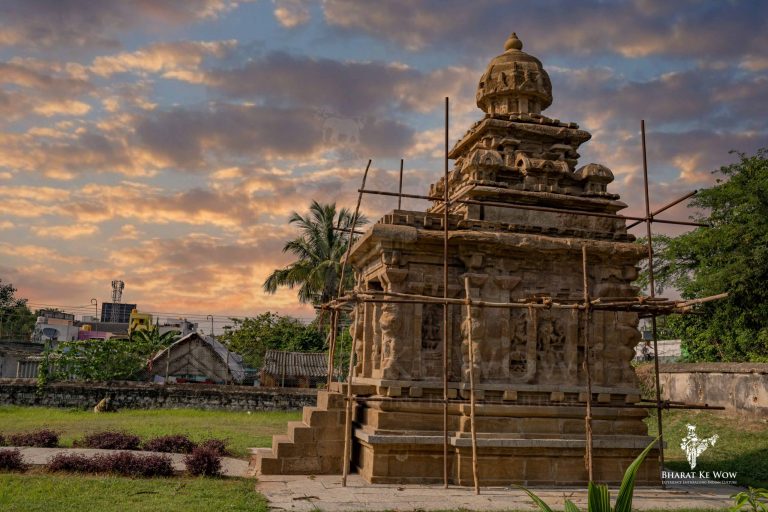
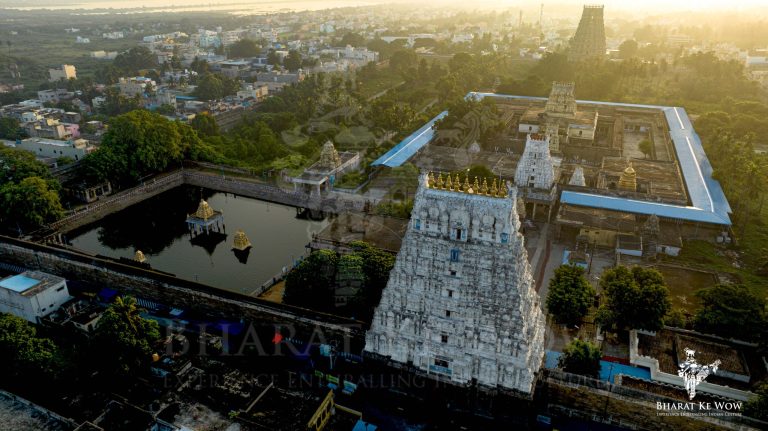
Located in the sacred city of Kanchipuram, Sri Kacchapeshvara Temple commemorates the Kurma (Kacchapa) incarnation of Lord Vishnu, who worshipped Lord Shiva after supporting Mount Mandara during the churning of the cosmic ocean. Blending Pallava foundations with Chola and Vijayanagara additions, this ancient temple is celebrated for its rich mythology, remarkable architecture, and enduring traditions that unite Shaiva and Vaishnava worship.
The sacred realm of Kacchapeshvara Temple in Kanchipuram, where mythology, architectural splendor, and spiritual devotion intertwine. This ancient temple, believed to have roots dating back to the 7th century CE, holds significance as the place where Lord Vishnu in his Kurmavatara (tortoise incarnation) worshipped Lord Shiva
02 / MYTHICAL SIGNIFICANCE
Mythical Significance
Kanchipuram houses various shrines associated with the Dashavatara legend, where each of Lord Vishnu’s ten incarnations worshipped a Shivalinga. Kacchapeshvara Temple is connected to the Kurmavatara legend, where Lord Vishnu assumed the form of a turtle. Lord Shiva, pleased by this devotion, earned the name Kacchapeshvara. The temple’s rich mythology adds a profound spiritual aura to its sacred surroundings.
03 / ARCHITECTURAL SPLENDOR
Architectural Splendor
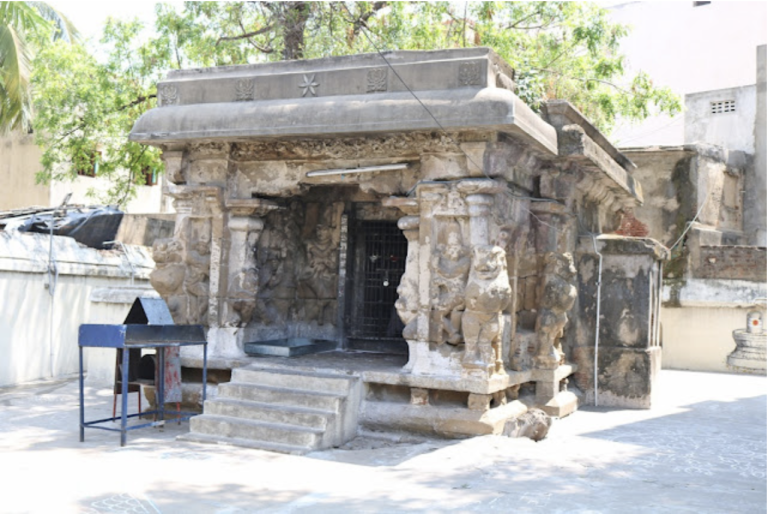
The temple’s architectural heritage spans several centuries, with additions made until the Vijayanagara period. The Chola emperors Raja Raja-I and Rajendra-I left inscriptions referring to the temple as anjan-sandi ambalam, denoting the presence of five shrines within a single complex. This early conceptualization hints at a Panchayatana Temple, featuring shrines for Surya, Vishnu, Shiva, Ganesha, and Durga. Explore the remarkable blend of Pallava and Chola architectural styles within the temple’s structures.
04 / LEGENDS OF DIVINE WORSHIP
Legends of Divine Worship
According to the Sthalapuranam (temple legend), during the churning of the milky ocean to obtain the nectar, the Devas and Asuras required a sturdy rope and churning rod. Mount Meru became the rod, and Vasuki, the serpent, served as the rope. However, the rod sank due to its weight and lack of a solid base. To address this, Lord Vishnu assumed the form of a turtle, Kacchapa, and bore the Mandara mountain on his back, aiding in the churning process. In gratitude and to absolve themselves of any distress caused during the churning, Lord Kacchapa worshipped Lord Shiva in Kanchipuram, giving rise to Kacchapeshvara. Worship at this temple is believed to bestow wisdom, progeny, and liberation from past sins.
05 / SACRED SANCTUM AND PRAKARAS
Sacred Sanctum and Prakaras
Enter the temple through the grand eastern gopuram, boasting five tiers. Within the Garbhagriha (sanctum sanctorum), you’ll find the lingabera, a sandstone (Prithvi Linga) symbol of Lord Shiva. True to the Pallava style, a magnificent Somaskanda panel adorns the wall behind the lingabera. The innermost prakara hosts separate shrines dedicated to various deities, including the Nayanmars (saints), Nandi, Chandrashekhara, Vinayaka (Polla Pillayar), Valli Devasena Subramanya, Sarasvathi, Navagrahas, Bhairava, and Mahavishnu. The second prakara houses shrines for Nataraja, Valli Devasena Subramanya, Yogasiddhishvara, Jnanasiddhishvara, and Dharmasiddhishvara lingas. The outermost prakara offers devotees the opportunity to worship Shasta, Lingeshvara, Caturmukheshvara, and more.
06 / INSCRIPTIONS AND FESTIVALS
Inscriptions and Festivals
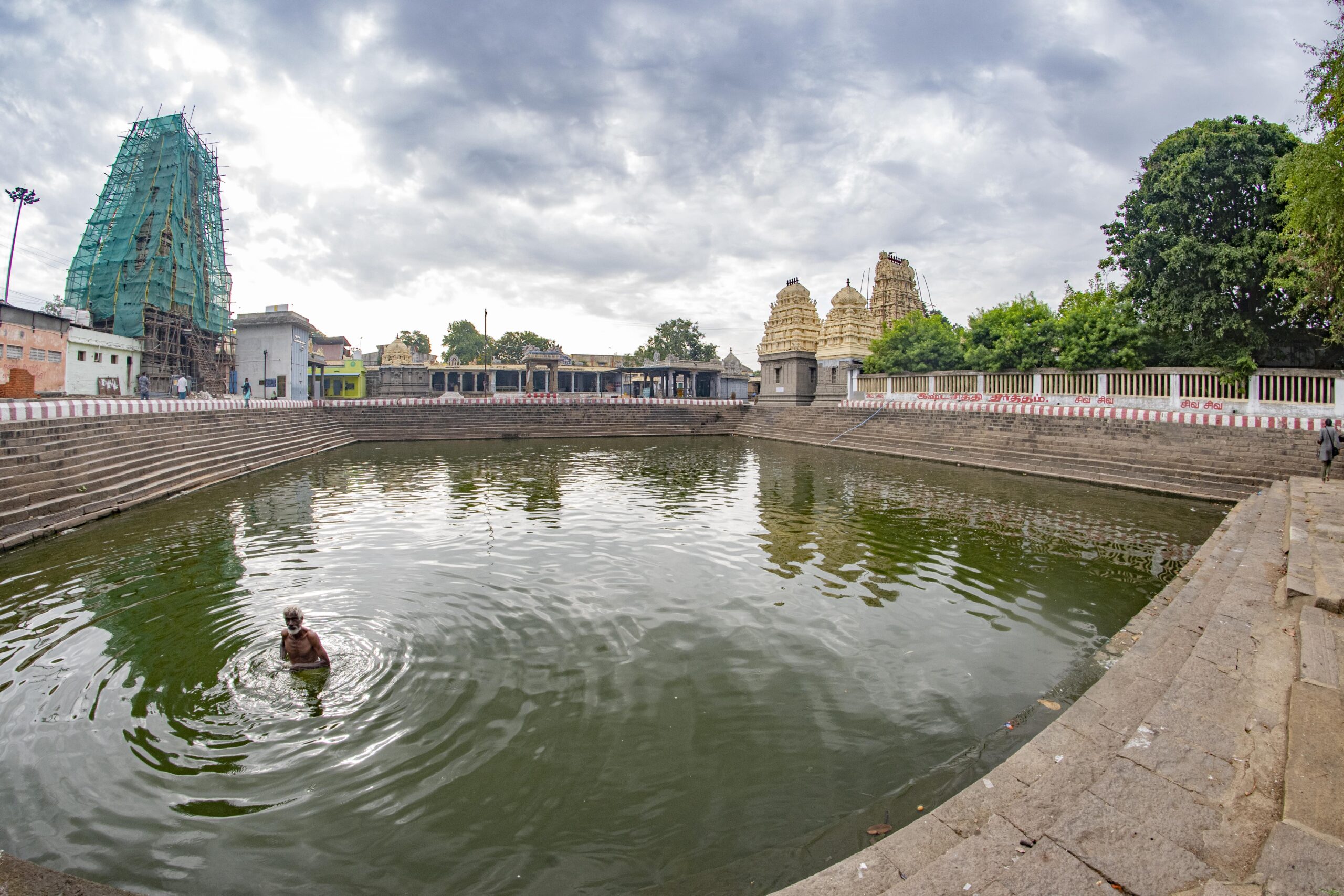
Numerous inscriptions found within the temple shed light on the contributions of the Pallava kings, including Raja Raja-I and Rajendra-I. Inscriptions also mention Mayurakavi (Mayurasharma), a Ghatikasthana student who later established the Kadambas of Banavasi, the first Kannada Kingdom. The temple hosts grand festivals such as the Brahmotsavam, held during the month of Chaithra, attracting a multitude of devotees. Chitrapournami, Shivaratri, and Margazhi Tiruvadirai are other significant occasions. Additionally, visitors flock to the temple in Kartigai, especially on Sundays, to take a holy dip in the sacred tank, Ishtasiddhi Tirtha.
Kacchapeshvara Temple in Kanchipuram is not only a treasure trove of mythology and architectural brilliance but also a sanctuary for spiritual seekers. Immerse yourself in the legends of incarnations, experience the divine grace that pervades the temple, and partake in the festivities that unite devotees in a shared devotion. Visit Kacchapeshvara Temple and embrace the serenity that transcends time, connecting the mortal realm with the eternal divine.
07 / WHY IT MATTERS
Why this place matters.
The Temple of Kurma Avatara
According to temple tradition, Lord Vishnu assumed the form of a divine tortoise to support Mount Mandara during the churning of the cosmic ocean. After completing this monumental task, he worshipped Lord Shiva here in gratitude, giving the deity the name Kacchapeshvara.
A Sacred Meeting of Two Traditions
Kacchapeshvara Temple beautifully represents the harmony between Shaivism and Vaishnavism. Lord Vishnu's worship of Lord Shiva symbolizes the unity of divine manifestations and the shared spiritual heritage of Kanchipuram.
A Living Monument of Three Dynasties
From its Pallava origins to Chola inscriptions and Vijayanagara expansions, the temple preserves over a thousand years of South Indian architectural evolution and royal patronage.
A Temple of Wisdom and Blessings
Devotees believe that worship at Kacchapeshvara Temple grants wisdom, progeny, freedom from past karmas, and spiritual progress. The temple continues to attract pilgrims seeking both material well-being and inner transformation.
08 / INSIDE THE TEMPLE
What to see inside.
The Sacred Sanctum
Receive darshan of Lord Kacchapeshvara, worshipped by Lord Vishnu in his Kurma incarnation after the cosmic churning of the ocean.
The Kurma Legend
Discover one of Hinduism's most celebrated myths, where the divine tortoise became the foundation for the Samudra Manthana and later sought Lord Shiva's blessings.
The Panchayatana Legacy
Explore the temple's historic layout, believed to represent one of the earliest Panchayatana concepts with shrines dedicated to Shiva, Vishnu, Surya, Ganesha, and Durga.
The Sacred Prakaras
Walk through the multiple temple enclosures housing numerous shrines dedicated to Nayanmars, Vinayaka, Subrahmanya, Saraswati, Bhairava, Navagrahas, and several forms of Shiva.
09 / THROUGH TIME
A history in layers.
- MYTHOLOGICAL ERA
Lord Vishnu, in his Kurma incarnation, supports Mount Mandara during the Samudra Manthana and later worships Lord Shiva at Kanchipuram.
- 7TH CENTURY CE
Temple believed to have originated during the Pallava period.
- CHOLA PERIOD
Raja Raja I and Rajendra I patronize the temple; inscriptions refer to the temple complex as Anjan-sandi Ambalam.
- VIJAYANAGARA PERIOD
Architectural expansions and additions enrich the temple complex.
- PRESENT DAY
Active place of worship renowned for blessings of wisdom, progeny, and spiritual fulfillment.
10 / PLAN YOUR VISIT
Plan your visit.
Timings and visitor details can change. Please confirm locally before you travel.
11 / PHOTOGRAPHS
From the whole to the detail.
Select a photograph to explore it at a larger scale.
12 / LOCATION & MAP
Place the story on the map.
PLACE THIS STORY ON THE MAP
Kanchipuram, Tamil Nadu
Tamil Nadu, India
ABOUT THIS FIELD ENTRY
Rooted in the Bharat Ke Wow archive.
This page is drawn from the Bharat Ke Wow field entry for Kacchapeshvara Temple. Sacred narratives are presented as temple tradition.
Read the original entry ↗