

01 / INTRODUCTION
The Lord who
cures even the incurable fevers
Nestled within the sacred city of Kanchipuram, Sri Jvarahareshvara Temple is a remarkable shrine celebrated for its unique oval sanctum and profound healing traditions. According to temple legend, Lord Shiva relieved the Devas of a devastating fever after vanquishing the demon Sura, earning the name Jvarahareshvara-"The Remover of Fevers." Blending Pallava ingenuity with Chola craftsmanship, the temple continues to attract devotees seeking health, healing, and divine protection.
The magnificent Jvarahareshvara Temple is a captivating shrine located in Kanchipuram. This temple, known for its unique ovular structure and architectural brilliance, is believed to have been built during the reign of Rajasimha Pallava or Kulottunga Chola-III. Explore the Chola-style design, significant legends, and the divine grace that Jvarahareshvara bestows upon its devotees.
02 / ARCHITECTURAL SPLENDOR
Architectural Splendor
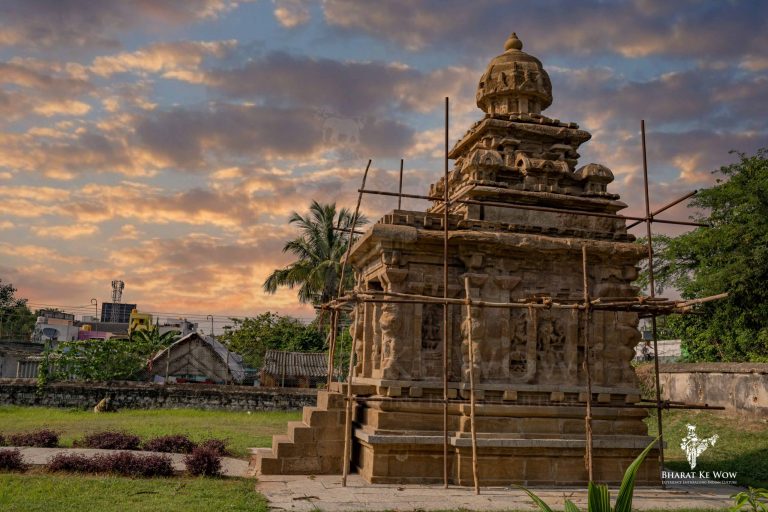
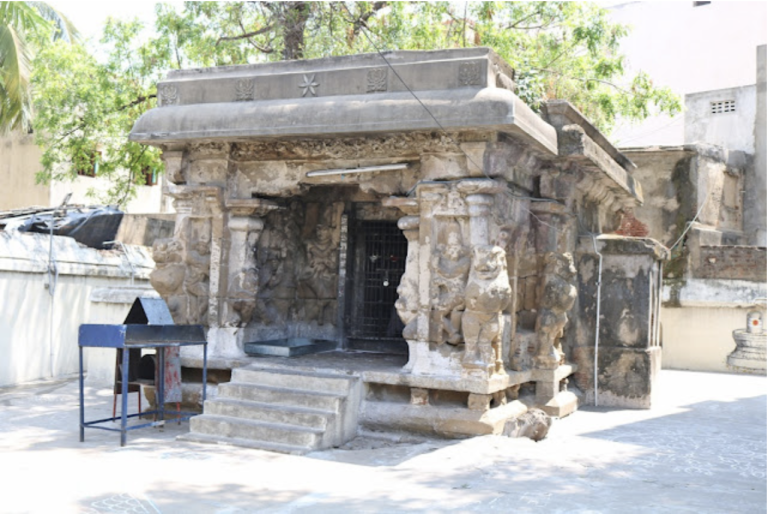
Jvarahareshvara Temple boasts a distinctive ovular structure, showcasing the remarkable craftsmanship of the Pallava and Chola dynasties. Scholars suggest the influence of Rajasimha Pallava and Kulottunga Chola-III in its construction. The temple’s arrangement and design exude the charm of the Chola architectural style, complemented by a few pillars showcasing the Pallava style. Notably, two inscriptions of Vikrama Chola can be found, documenting land grants and tax exemptions for the temple.
03 / SACRED ENTRANCE AND MANDAPA
Sacred Entrance and Mandapa
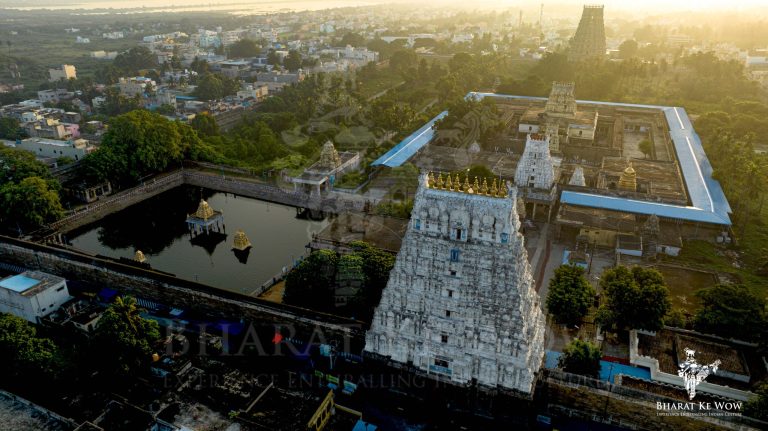
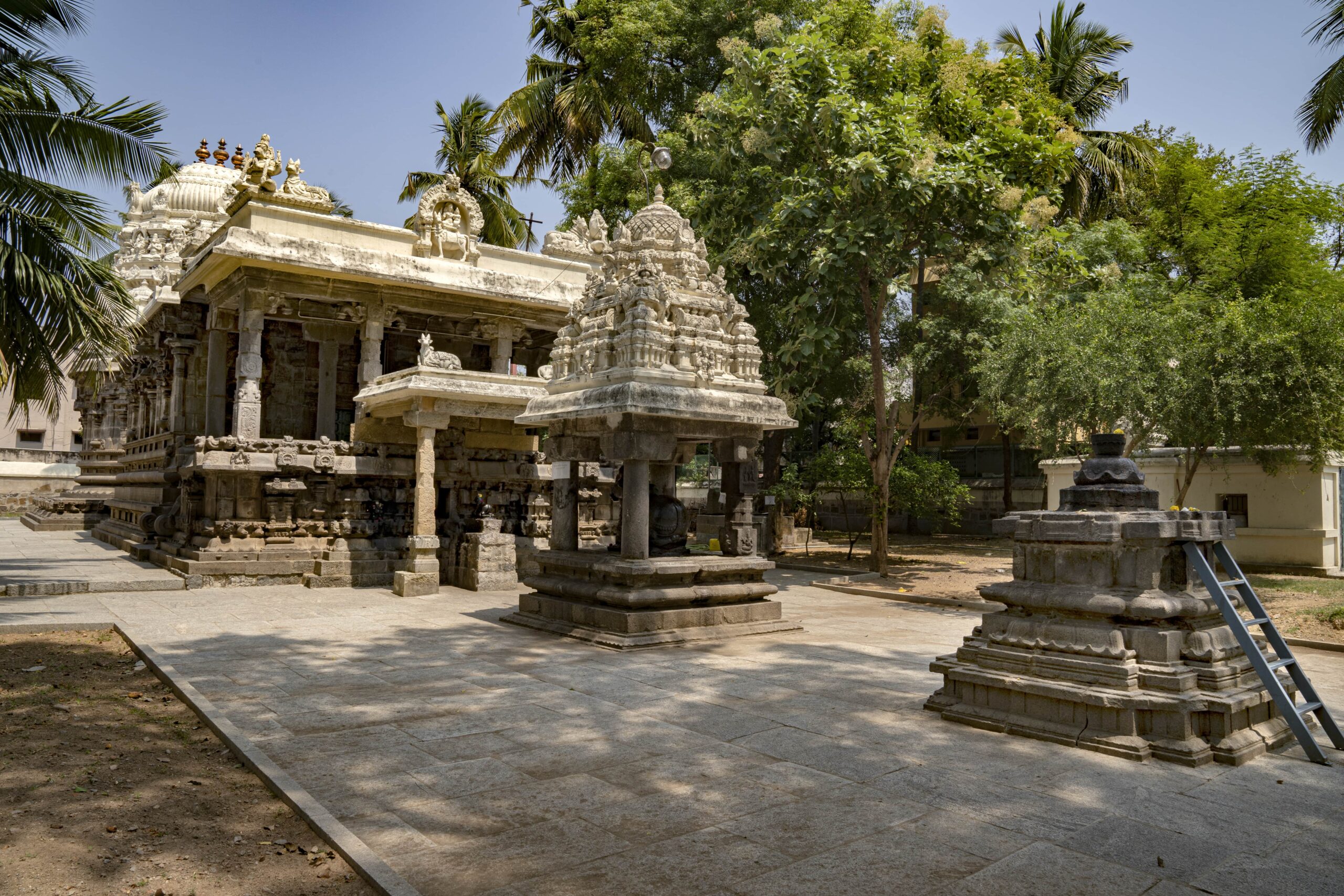
Enter the temple through a small five-tiered Rajagopura, leading to the courtyard. Here, you will encounter the exquisite four-pillared nandi mandapa, crafted from granite, with an elegant shikhara (spire) atop. The mandapa is adorned with the images of Shankhanidhi, Padmanidhi, Brahma, and Vishnu, creating a serene ambiance. Vinayaka and Parvati sculptures grace the archway, welcoming devotees to the Garbhagriha (sanctum sanctorum).
04 / LEGEND OF DIVINE HEALING
Legend of Divine Healing
According to the temple’s sthalapuranam (legend), the Devas (celestial beings) faced constant trouble from the demon named Sura. Seeking respite, Lord Brahma approached Lord Shiva, who was immersed in deep meditation, and implored him to eradicate the menace. Obliging their request, Lord Shiva unleashed the fire from his third eye, vanquishing the demon. However, the intense heat afflicted the Devas with a severe fever (Jvara). Instructed by Lord Brahma, they sought Lord Shiva’s blessings in Kanchipuram, who graciously healed them. Hence, Lord Shiva came to be known as Jvarahareshvara, the remover of fevers.
05 / SACRED SANCTUM AND HEALING GRACE
Sacred Sanctum and Healing Grace
The main temple stands on an elevated basement, showcasing exquisite carvings and intricate motifs. Within the temple, the Garbhagriha houses the divine form of Lord Shiva as Jvarahareshvara, represented by a sandstone linga mounted on a rectangular yonipitha. Notably, the rear wall of the Garbhagriha features a unique bas-relief depicting Shiva with Indra, further enhancing the sanctity of the temple. Devotees seek solace, healing, and blessings from Jvarahareshvara, recognizing his power to alleviate diseases and afflictions.
Jvarahareshvara Temple stands as a testament to the artistic finesse of the Pallava and Chola dynasties. Embark on a spiritual journey to this awe-inspiring shrine, marvel at its ovular structure, and immerse yourself in the divine grace and healing energy of Jvarahareshvara. Pay homage to Lord Shiva, the remover of fevers, and experience the profound sense of peace and tranquility that permeates this sacred abode.
06 / WHY IT MATTERS
Why this place matters.
Temple of Divine Healing
Temple tradition narrates that after Lord Shiva destroyed the demon Sura with the fire of his third eye, the intense heat afflicted the Devas with a terrible fever. Worshipping Lord Shiva at this sacred site restored their health, giving the deity the name Jvarahareshvara.
A Rare Architectural Treasure
The temple is renowned for its unusual oval-shaped sanctum, a rare feature in South Indian temple architecture. Combined with elegant Pallava and Chola craftsmanship, it represents one of Kanchipuram's distinctive architectural monuments.
Legacy of Two Great Dynasties
Scholars associate the temple with Rajasimha Pallava or Kulottunga Chola III, while inscriptions of Vikrama Chola record royal patronage through land grants and tax exemptions, highlighting its enduring historical importance.
A Living Shrine of Wellness
For centuries, devotees have worshipped Lord Jvarahareshvara seeking relief from illness, recurring fevers, and physical suffering. The temple remains an active center of faith where healing is understood as both physical restoration and spiritual renewal.
07 / INSIDE THE TEMPLE
What to see inside.
The Sacred Sanctum
Receive darshan of Lord Jvarahareshvara, worshipped as the compassionate healer who relieved the Devas of their afflictions.
The Healing Legend
Explore the fascinating story of how Lord Shiva transformed destructive fire into divine healing, making this temple a place of hope for devotees seeking relief from illness.
The Oval Temple Design
Observe the temple's rare oval architectural layout, an uncommon feature that distinguishes it from most South Indian Shiva temples.
The Nandi Mandapa
Admire the beautifully carved granite pavilion housing Nandi, along with sculptures of Shankhanidhi, Padmanidhi, Brahma, and Vishnu.
08 / THROUGH TIME
A history in layers.
- MYTHOLOGICAL ERA
Lord Shiva destroys the demon Sura and later cures the Devas of the divine fever, becoming Jvarahareshvara.
- EARLY MEDIEVAL PERIOD
Temple believed to have originated during the reign of Rajasimha Pallava.
- CHOLA PERIOD
Renovations attributed to Kulottunga Chola III; inscriptions of Vikrama Chola record royal patronage.
- LATER MEDIEVAL PERIOD
Continued worship and maintenance under successive dynasties.
- PRESENT DAY
Active temple where devotees continue to pray for healing and well-being.
09 / PLAN YOUR VISIT
Plan your visit.
Timings and visitor details can change. Please confirm locally before you travel.
10 / PHOTOGRAPHS
From the whole to the detail.
Select a photograph to explore it at a larger scale.
11 / LOCATION & MAP
Place the story on the map.
PLACE THIS STORY ON THE MAP
Kanchipuram, Tamil Nadu
Tamil Nadu, India
ABOUT THIS FIELD ENTRY
Rooted in the Bharat Ke Wow archive.
This page is drawn from the Bharat Ke Wow field entry for Jvarahareshvara Temple. Sacred narratives are presented as temple tradition.
Read the original entry ↗